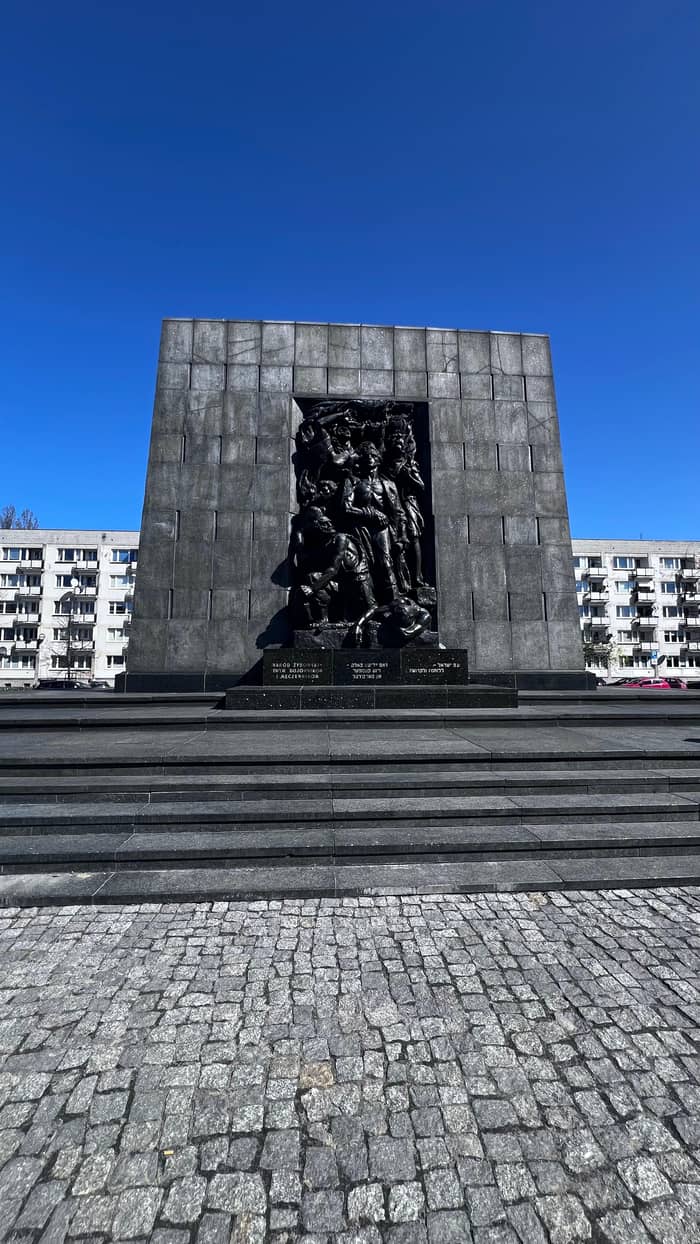
Mild
Late spring
May and June
- Siedlce highMay 19.4 °C
- Okecie rainJune 71 mm
- WearLayers, rain jacket
Guides
Language
Currency
See open slotsfrom €74 · cancel without payingInteractive tick list
Private Ghetto walk with pickup, 3 hours
★ 4.9 · 388 guest reviews
Checklist: 12 items
Mark each item when done. Progress is stored on this device.
0 / 12 ready
You are ready. Only the date and the size of your party are left to choose.
Book a seatA Warsaw Jewish ghetto walking tour asks for some preparation: where to meet, what to wear in each season, how to prepare children, how to behave at the memorials and what to read before you go.
Editorial team, warsawghettotour.click · Updated November 9, 2026 · Allow 7 min
Facts at a glance
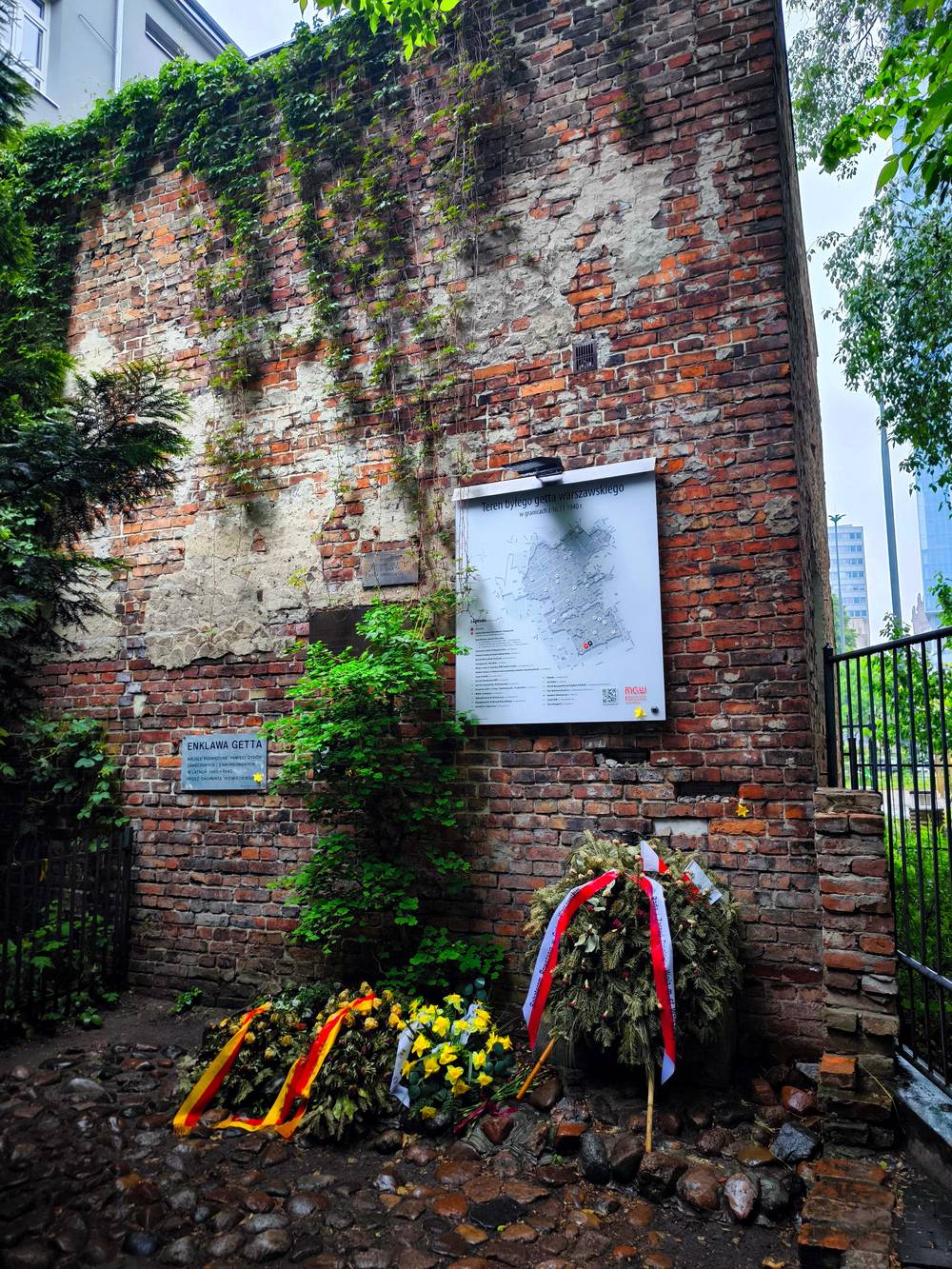
The Warsaw Jewish ghetto walking tour this site books is a private, 3-hour walk, and your guide will speak English or German. The walk's listing points to remnants of the wall, the streets and neighbourhoods once inside the ghetto, its last surviving street, the deportation square, the Ghetto Heroes memorial and the one synagogue in Warsaw that outlived the war. The order and the timing are set by your guide on the day.
You can start at your hotel or at the meeting point. If you add pickup, the guide comes to you; if not, the meeting point is number 9 on Prozna Street, where a sign marks the guide. Few streets keep the air of pre-war Jewish Warsaw as Prozna Street does, a fitting first stop.2 Be there a few minutes ahead and watch for the guide's sign, not a crowd.
The walk is on city pavements, with standing at each memorial. Expect to cover a fair distance at a gentle pace, and to stop often while the guide explains. Reviewers mention historical photographs and maps that the guide uses to show what stood where, which helps on streets where little of the ghetto remains.
Poland has four clear seasons, and the walk is outdoors. Poland's tourism organisation recommends late spring, May to June, and early autumn, September to October, for warmth with fewer crowds.1 Autumn weather shifts quickly, and by November rain and colder air arrive.4 In winter the days become visibly shorter.3
This page draws its climate figures from a pair of stations, since neither holds both records for central Warsaw: rainfall from Warsaw-Okecie, 9.4 km away, and temperatures from Siedlce, 85.6 km east.5 Siedlce records an average high of 0.6 °C in January and 24.9 °C in July.5,5 At Okecie, July brings the wettest month on average, with 75 mm.5
Dress for standing, not for walking: the guide talks at each memorial, and standing still is when the chill reaches you. In winter that means a warm coat, a hat and gloves; in summer, a hat and water. In spring and autumn, a waterproof layer and shoes that keep out puddles make the difference between a good morning and a miserable one.
Month by month
Mid-month hours of no sun and days of 2.5 mm precipitation or more, as recorded by NOAA station Warsaw-Okecie (rainfall) and Siedlce (temperatures) over 1991 to 2020.5
There is no single right age, but there are clear signals from the tours themselves. One well-reviewed group walk draws its line at age 16. POLIN asks that children aged 12 or younger stay with an adult at all times. Those lines reflect the content: deportation, hunger and murder, told in the places where they happened.
A private walk gives parents more control. Tell the guide in advance how old your children are, what they already know and what you would rather explain yourself. A good guide can focus on daily life, on the people who resisted and on those who helped, and leave the hardest details for the adults. Agree on a signal that means a child has heard enough, and the guide can move on without a scene.
Talk to your children before the day, in plain words, about what a ghetto was and why the city remembers it. Let them ask questions afterwards, and do not expect them to react the way you do. A quiet hour in Krasinski Garden after the walk gives everyone room to settle. Children often return to the subject days later, and that is a sign the visit did its work.
Your questions
Find your situation and see the one thing to sort out first.
If I am bringing a teenager
Talk it through first
One group walk excludes under-16s; brief the guide on a private walk.
If I am tracing my family
Tell the guide early
Much of the Ghetto was razed, but the guide can locate an address.6
If I tire easily
Use the pickup
Pickup is available on the private walk.
If I am visiting in January
Dress for standing
Daytime highs average 0.6 °C at Siedlce in January.5
If I want the synagogue
Bring cash
Have PLN 20 or EUR 5 ready for the synagogue door.
Three seasons
Mild
May and June
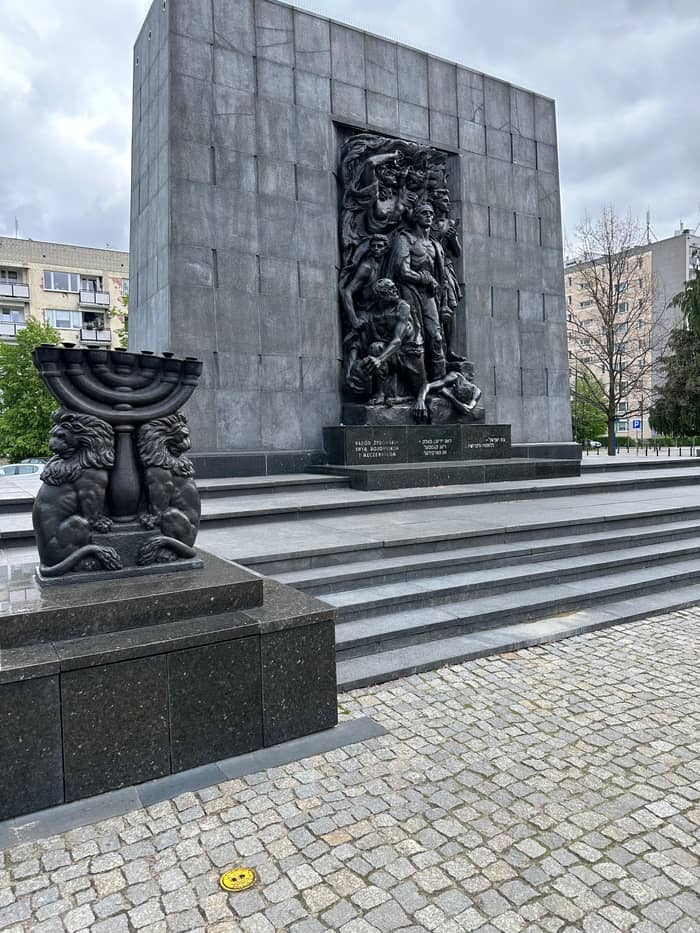
Warm
July and August
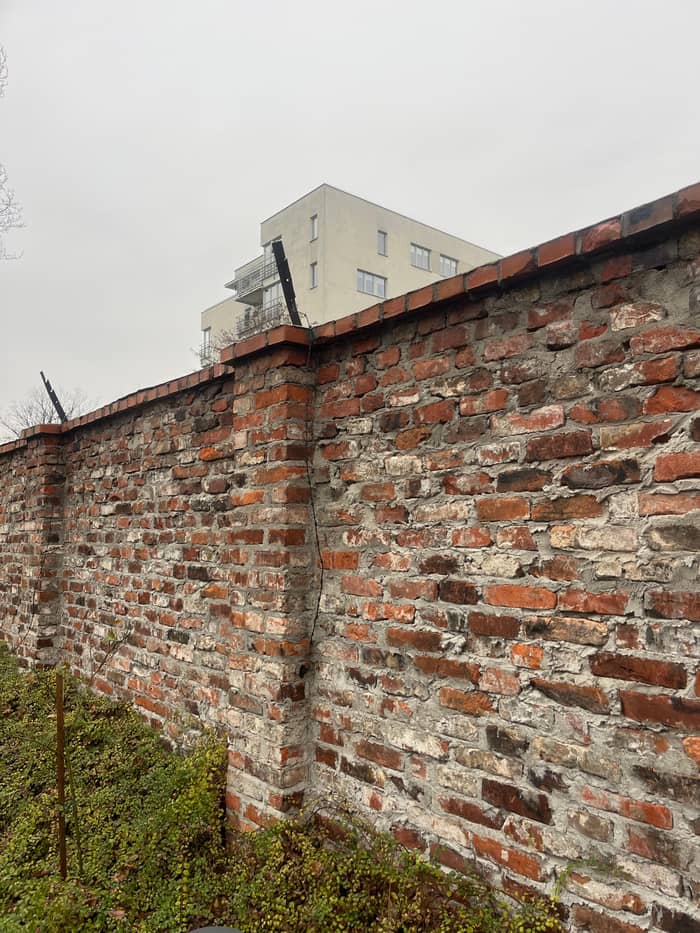
Cold
December to February
The places on this walk are memorials, and some are graves in all but name. At the Umschlagplatz, where transports to Treblinka left from July 22, 1942, the stone walls bear the names of victims.9,10 Speak quietly, keep children close and avoid sitting on the monuments. If other visitors are standing in silence, wait at a distance until they move on.
Photographs are a matter of judgement. Photographing the wall fragments, the pavement markers and the monuments to remember them is normal; posing with them is not. Avoid selfies at the deportation memorial or in front of the Ghetto Heroes monument, and ask before photographing other visitors who are praying or laying stones.
Inside the synagogue, follow what the guide and the staff ask. The synagogue charges PLN 20 or EUR 5 at the entrance, so have cash ready. Dress modestly and follow any request to cover your head. It is a working house of prayer, not only a monument. If a service is under way, the guide will know whether a visit can go ahead or must wait.
The day of the walk
The evening before
Dress for standing outdoors; days are short in winter.3
At the start
Meet at Prozna Street 9 or at your pickup point.
On the walk
Wall fragments, the Umschlagplatz, the Ghetto Heroes.
At the synagogue
Have PLN 20 or EUR 5 ready in cash.
Afterwards
Leave time to rest before anything else.
Few walks ask as much of their listeners as this one. The Ghetto was a place of hunger and disease, and the deportations from it led to Treblinka.9 Hearing that history in the streets where it happened is harder than reading it at home, and reviewers describe the walk as moving; one called every moment of it deeply personal.
Plan the rest of the day with that in mind. Avoid booking a lively dinner or a show straight after; give yourself an hour with nothing scheduled. A café in Muranow or a slow walk to the river helps more than another sight. Some travelers write down what they heard while it is fresh; others simply walk without talking for a while.
If you are visiting because of your own family history, tell the guide at the start. The private format lets the walk slow down where you need it, and the guide can point to where a street lay even when the building is gone; post-war Muranow rose on the ruins of the Ghetto.6 Bring any old addresses, letters or photographs you have; the guide can work with very little.
Video
Warsaw Luke on YouTube · Video data is requested only when you tap play.
The monument was created shortly after the World War II to commemorate those who fought and died in the Warsaw ghetto.
Our private walk's listing says nothing about step-free routes; ask the provider at booking if access matters. Some group walks in the same area state that they are wheelchair accessible. Pickup, available on the private walk, shortens the first leg for anyone who tires easily. Tell the guide about any rest you need, and the route can include benches and shade.
Carry water, a small amount of cash in zloty and a charged phone. Euros work only in some bigger shops, since Poland uses the zloty.11,12 Going on by tram? Validate on boarding.8 Machines on trams and at stops accept coins or cards and have an English screen.13 A day ticket saves thinking about fares if you plan several rides.
Check the calendar before you book. Saturday is a closed day at both the synagogue and the Jewish cemetery, and some museums shut on public holidays.14 Free cancellation up to 24 hours before the start lets you move the walk if the weather or your plans change. Reserving early costs nothing, since payment can wait until later.
A little reading changes what you see. The Ringelblum Archive, gathered in hiding by the historian Emanuel Ringelblum and his Oneg Shabbat group, is kept at the Jewish Historical Institute and registered by UNESCO in its Memory of the World programme.15,16 Even a few of its documents, read in translation, give the streets a human voice.
Films help too. Roman Polanski's The Pianist follows a single survivor through the ghetto years and the destruction of the city, and it gives a sense of the streets before you walk them. Documentaries made with survivors are a gentler start for teenagers, since they let the witnesses speak in their own words and at their own pace.
After the walk, POLIN and the Jewish Historical Institute complete the picture: POLIN is free on Thursdays, the Institute on Mondays.17,18 Our page on what the Warsaw Ghetto was gives the history in order, from the sealing to the uprising, if you want it fresh in mind before a walking tour of the Warsaw Ghetto.
FAQ
Your hotel, if you choose pickup, or Prozna Street 9, where the guide waits holding a sign.
Much of the walk is spent at memorials; dress warmly in winter, when days grow visibly shorter.3
One group walk excludes children under 16; on a private walk, agree the content with the guide first.
Yes, quietly: photograph the memorials, but skip posed shots and selfies at the Umschlagplatz and its engraved names.10
Bring PLN 20 or EUR 5 in cash for the synagogue, which charges it separately from the tour.
Poland's national tourism body recommends May, June, September and October.1
A heritage tour listing marks Saturday as closed at the synagogue and at the cemetery.
Sources
Questions about the Ghetto walk? Ask a real person here.