Group walk
Jewish history walk
From Grzybowski Square
- Length2.5 hours
- GuideEnglish, Spanish
- MeetsAll Saints Church
Guides
Language
Currency
See open slotsfrom €74 · cancel without payingFind a stop on the map
Warsaw: Jewish History Guided Walking Tour in English
★ 4.7 · 345 guest reviews
Discover 23 stops
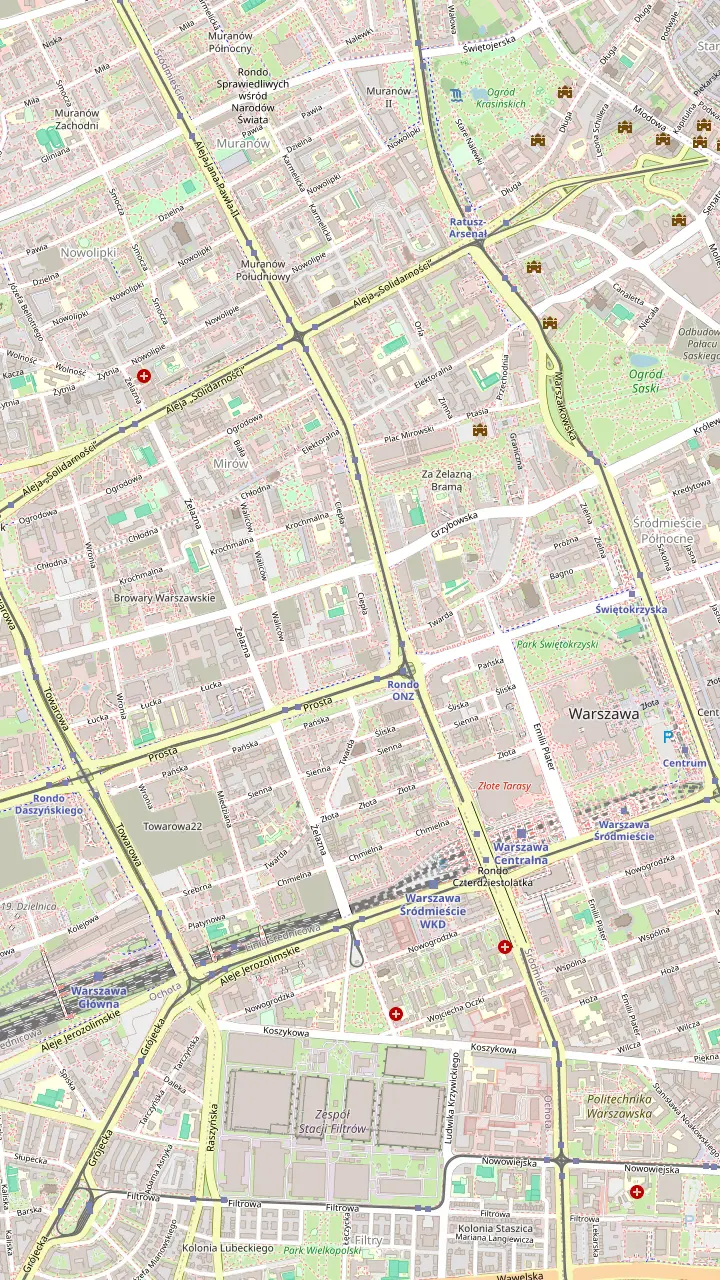
Select a route, then tap a marker or stop to see its note and open Google Maps.
Before the war the square bustled with Jewish shops and stalls; the Singer's Warsaw festival ends here with a concert.
Google MapsThe only pre-war synagogue in Warsaw still in use; open Sunday to Thursday 10 AM to 5 PM, Fridays to 4.00 PM.
Google MapsOne of the few streets of the ghetto that survived the war.
Google MapsWall fragments in the courtyard between Sienna 55 and Złota 62; the Bersohn and Bauman hospital at Sienna 60 stands beside it.
Google MapsThe walls of the pre-war house at 11 Waliców date from the ghetto years; the poet Szlengel lived at number 14.
Google MapsA light installation where a wooden footbridge joined the Large and Small Ghettos from 26 January 1942.
Google MapsIn May 1943 Marek Edelman's group left the sewers through the manhole at 51 Prosta Street.
Google Maps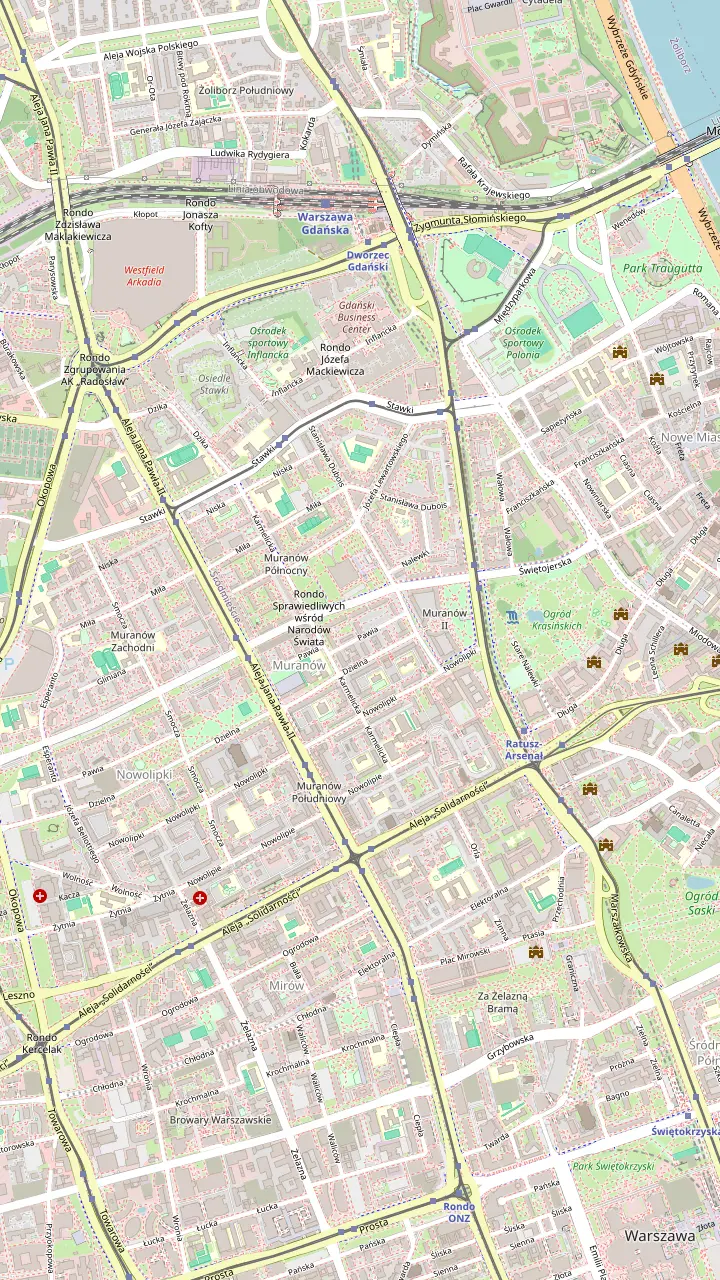
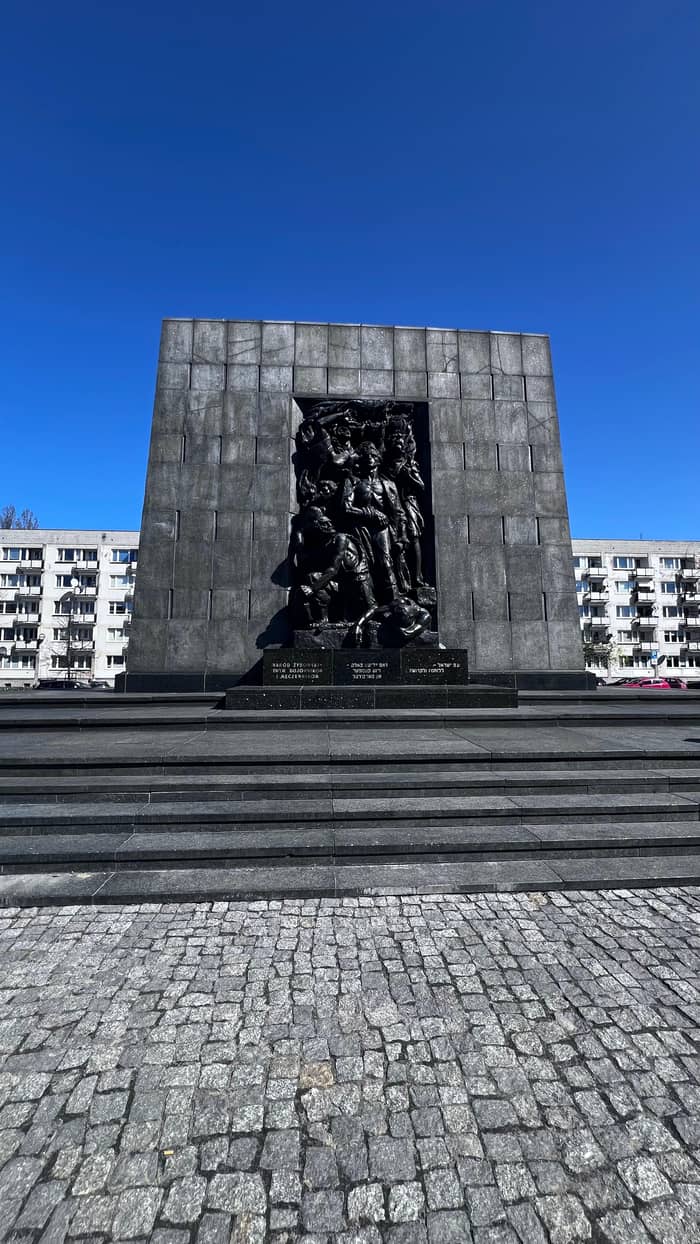
Raised soon after the war; Willy Brandt knelt here in 1970.
Google MapsThe focal point of Muranów since 2013; the tourist office plans 3 hours for a visit.
Google MapsThe ŻOB command bunker, found by the Germans on 8 May 1943; a mound and plaques mark it.
Google MapsTransports to the Treblinka extermination camp left from here from 22 July 1942.
Google MapsAt Dzielna 24/26; closed to visitors from 27 February 2026 until the autumn; check before you go.
Google MapsThe ghetto's secret archive was hidden in a school basement at today's 28 Nowolipki Street.
Google MapsThe Ringelblum Archive exhibition and fire traces on the floor; free on Mondays, closed on Saturdays.
Google MapsA surviving stretch of the old Jewish main street, with its cobbles and tram rails.
Google Maps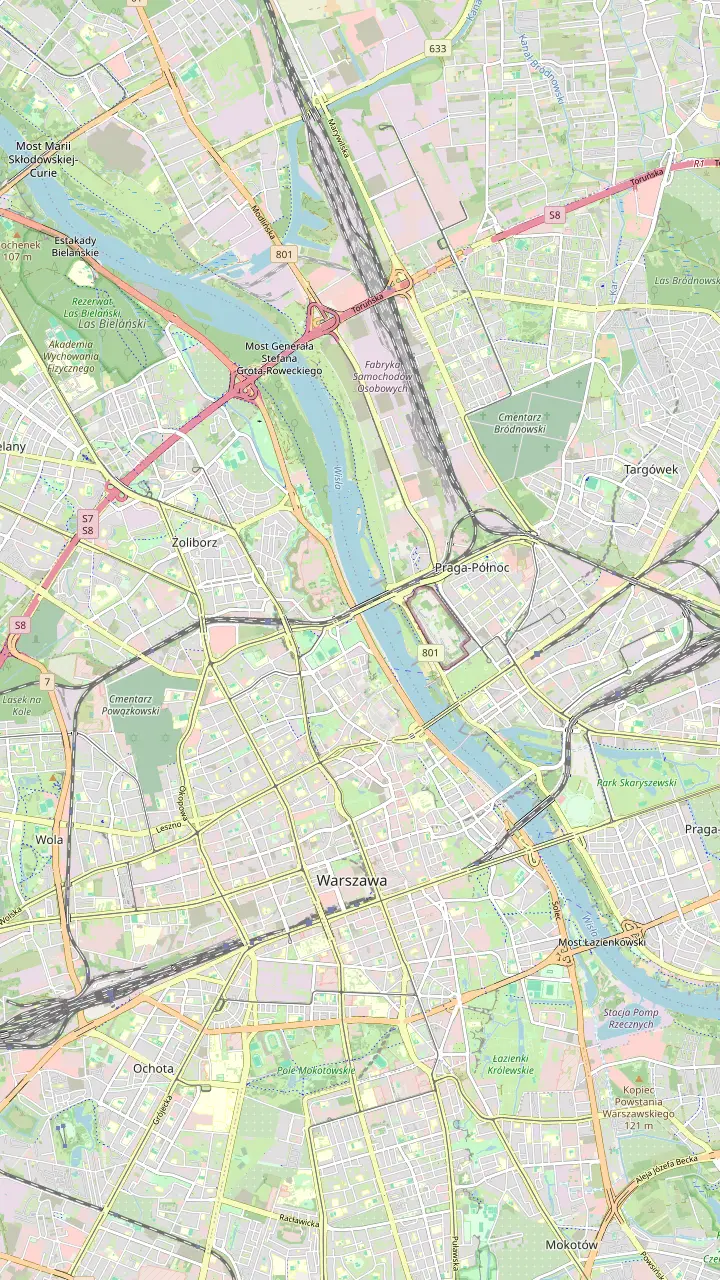
Open Sunday to Thursday 10:00 AM to 5:00 PM and Friday to 3:00 PM; admission PLN 20.
Google MapsFounded in 1780; open on Sundays from 10.00 AM to 4.00 PM with its exhibition.
Google MapsThe zoo director's family hid Jews from the ghetto here; by the tourist office's estimate, as many as 300 people survived thanks to them.
Google Maps2 rooms of a former house of prayer with wall paintings, in the Museum of Warsaw Praga.
Google Maps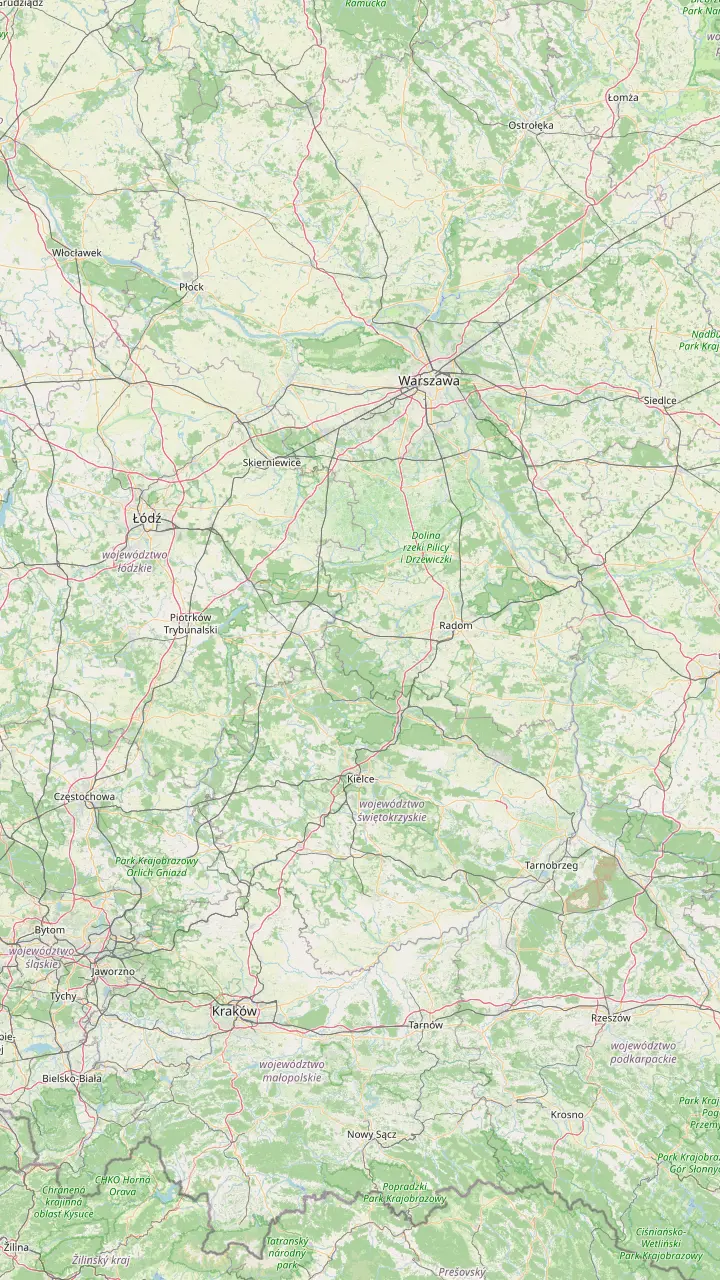
Fast-train tours to Auschwitz meet here; the train to Krakow takes 2.5 hours.
Google MapsWólka Okrąglik 115; the former camp areas are open from 9:00 AM to 6:30 PM, and in winter visitors leave by 4:00 PM.
Google MapsTrain day trips from Warsaw continue from Krakow to Auschwitz by shared transport.
Google MapsFree entry with an online entry card; open every day except 1 January, 25 December and Easter Sunday.
Google MapsMapping data © OpenStreetMap contributors
A Warsaw Ghetto self-guided tour links the scattered traces of the walled district into a single walk, from the Nożyk Synagogue to the Umschlagplatz, with a map and the opening hours you need.
Editorial team, warsawghettotour.click · Updated November 9, 2026 · Allow 8 min
Facts at a glance
Can you visit the Warsaw Ghetto today? Not as a place you can enter, but as a map of traces. After the Uprising of April 1943 the district was razed to the ground, and new housing was later built on its ruins.9,10 The Warsaw Ghetto Museum puts it plainly: material traces of Jewish presence in the city are scarce.11 What you will find are fragments, memorials and a few streets that the war spared.
A Warsaw Ghetto self-guided tour works best split into a southern and a northern part. The southern part covers the former Small Ghetto around Grzybowski Square and Próżna Street, then Złota, Sienna and Waliców Streets, where real fragments of the wall still stand, and Chłodna Street.12 The northern part covers Muranów, the former Large Ghetto, with the Ghetto Heroes monument facing POLIN, the mound on Miła Street and the Umschlagplatz. Each part is a walk of a few hours with stops.
Use the map to plan the order. The pins run in walking order, south first and then north, and each one opens in Google Maps. A map is a help, but look down at the pavement as well as around you: iron slabs in the pavement mark the line of the old boundary.4 Following them shows how close the wall ran to streets that look entirely ordinary today, past bus stops, cafes and playgrounds.
Plan the stops
| Stop | Address | Access |
|---|---|---|
| Nożyk Synagogue | Twarda 6 | Closed Saturdays |
| Wall fragment | Złota 62 courtyard | Open courtyard |
| Mi Polin Mezuzah Center | Złota 62 | Free entry |
| Footbridge of Remembrance | Chłodna at Żelazna | Open street |
| Jewish Historical Institute | Tłomackie 3/5 | PLN 15, free Mondays |
| Pawiak Prison Museum | Dzielna 24/26 | Check reopening |
| Umschlagplatz | Stawki Street | Open memorial |
Sources for addresses and access: the Jewish Community of Warsaw, Warsaw's tourism office and the Jewish Historical Institute.19,4,21,22,23,24,25
Start on Grzybowski Square, north of the Palace of Culture. Before the war it was crowded with Jewish shops and stalls.1 Every summer the Singer's Warsaw festival closes here with a concert, on the square the tourist office calls the heart of the Jewish quarter a century ago.16 Guided Jewish history walks meet here too, by All Saints Church, and it is the natural starting line for this part of the city.
Then walk into Próżna Street, a rare ghetto street that came through the war.2 The tourist office counts it among the rare places where something of the atmosphere of Jewish Warsaw is still felt.17 Look at the facades on both sides, the balconies and the gateways, and imagine the street full of people, shop signs and noise. Take your time here before you walk round the corner to Twarda Street.
At 6 Twarda Street stands the Nożyk Synagogue. Of the city's pre-war synagogues, it alone came through the war and still holds prayers.3 The Germans used it as a stable and a store for fodder during the war.18 You can look inside between 10 AM and 5 PM from Sunday to Thursday, or until 4.00 PM on a Friday, outside a short lunchtime pause, and it is a working place of worship with daily services.19,20 Dress modestly and follow the guidance of the staff at the door.
Route
Start
The pre-war heart of Jewish trade.1
Next
South
Fragments in the courtyard by Złota 62 and Sienna 55.12
West
The Footbridge of Remembrance on Chłodna.5
North
The institute, Nalewki, the archive site and Pawiak.13,14,15
End
Along the memorial stones from the Ghetto Heroes.6
From the synagogue, walk south-west to Złota 62. Through the courtyard between Złota and Sienna Streets you reach fragments of the ghetto wall.4 The tourist office describes the stretch by Sienna 55 as a silent witness, standing in sharp contrast to the hotel tower nearby.28 It is a quiet residential courtyard: go in calmly, keep your voice down and remember that people live in the flats around you.
Next to the wall, the small Mi Polin Mezuzah Center documents the marks that mezuzahs left on door frames across Poland, and entrance is free.29,21 A few steps away, at 60 Sienna Street, is the building of the Bersohn and Bauman Children's Hospital, built in 1876 to 1878.30 The museum of the ghetto is being fitted out inside this survivor of the district; for the moment you can only see the outside.31
Near the corner with Złota Street, look down for a pavement line marked with the dates 1940 to 1943 and the words ghetto wall.32 It is easy to miss and powerful when you find it. The Warsaw Ghetto Museum's own walk through this small area takes an hour and a half and visits wall remnants on Sienna, Złota, Twarda and Waliców Streets.33 If you are short of time, this cluster of sites is the one not to skip.
Plan your day
It depends on your time and what you want to take home.
If I have a single afternoon
Walk the southern part
The synagogue, the wall and the footbridge lie close together.3,12,5
If I want the stories behind the stones
Book a guided walk first
The tourist office recommends licensed guides for Jewish Warsaw.26
If I am on a tight budget
Go to the institute on a Monday
The Jewish Historical Institute's exhibitions cost nothing on Mondays.7
If I travel on a Saturday
Plan open-air stops
The synagogue hours list no Saturday, and the institute is closed that day.19,8
If I can come back after dark
See the footbridge lit up
The installation looks most impressive in the evening.5
With a guide
Group walk
From Grzybowski Square
Group walk
Synagogue, wall and footbridge
Private group
At your own pace
Walk north to Waliców Street. The house at 14 Waliców lay inside the ghetto and was home to the poet Władysław Szlengel, and the tourist office notes a section of wall across the street.34 The walls of the pre-war house at 11 Waliców also date from the ghetto years.12 The brick is scarred and patched, and standing between these walls is one of the closest encounters with the ghetto that Warsaw still offers.
A short walk further north brings you to Chłodna Street at the corner of Żelazna. Chłodna itself was kept outside the ghetto, and from 26 January 1942 people crossed it on a wooden footbridge the Germans had built between the Large and Small Ghettos.22 Today the Footbridge of Remembrance, a light installation, recalls it, and it looks most striking in the evening.5 Come back after dark if you can; the lit frames make the missing bridge easy to picture.
If you have time, make a detour south-west to Prosta Street. In May 1943 a group of fighters led by Marek Edelman came up out of the sewers through a manhole at 51 Prosta Street, and a memorial marks the place.36,35 It stands among modern buildings and is easy to overlook; keep an eye out for it. From Chłodna, head north-east towards Muranów for the second part of the walk, or stop here for the day and continue tomorrow with fresh eyes.
Compare with a guide
Choose a guided walk and your party size.
Look at 4 options
Choose a guided walk and your party size.
≈
View≈
View≈
View≈
ViewConverted at the ECB reference rate, from-prices as listed by GetYourGuide. The precise amount is shown when you book.
Muranów was rebuilt on the ruins of the ghetto, and the tourist office points out that its knolls and steps are made of that rubble.56,57 Start this part at the Jewish Historical Institute, Tłomackie 3/5, in the building of the pre-war Main Judaic Library. Inside you can still see traces of the fire the Germans set in 1943, and the exhibition on the Ringelblum Archive.13,58 Its doors open at 10 AM and close at 6 PM from Sunday through Thursday, and its exhibitions cost nothing on Mondays.8,7
Walk to the gate of the Krasiński Garden. A short stretch of Nalewki, the old main street of Jewish Warsaw, survives along the garden fence, with its original cobbles and tram rails.14 Then go west to Nowolipki Street. Between Nowolipki 28 and 30 a monument marks the spot where the Ringelblum Archive was hidden in the basement of a school.15,44 The brick church tower on Nowolipki is among the few buildings that survived the ghetto's demolition.59
The Pawiak Prison Museum stands at Dzielna 24/26.24 By the tourist office's estimate, some 100,000 people were held at Pawiak and nearly 37,000 of them were shot.60 A bronze copy of the elm on which families hung epitaphs stands outside.61 The museum was closed to visitors from 27 February 2026 until the autumn; confirm the reopening before you count on a visit inside.43 The memorial tree outside can be seen either way.
Video
MACK TRAVELS on YouTube · Video data is requested only when you tap play.
There are things we wish we could forget. And there are things we have no right to forget.
Pack and plan
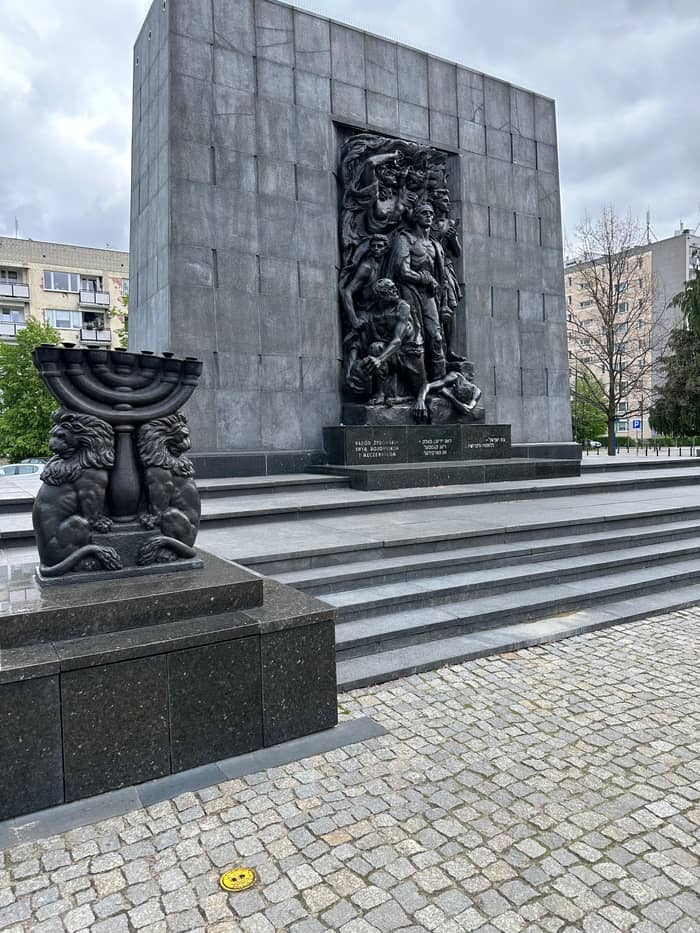
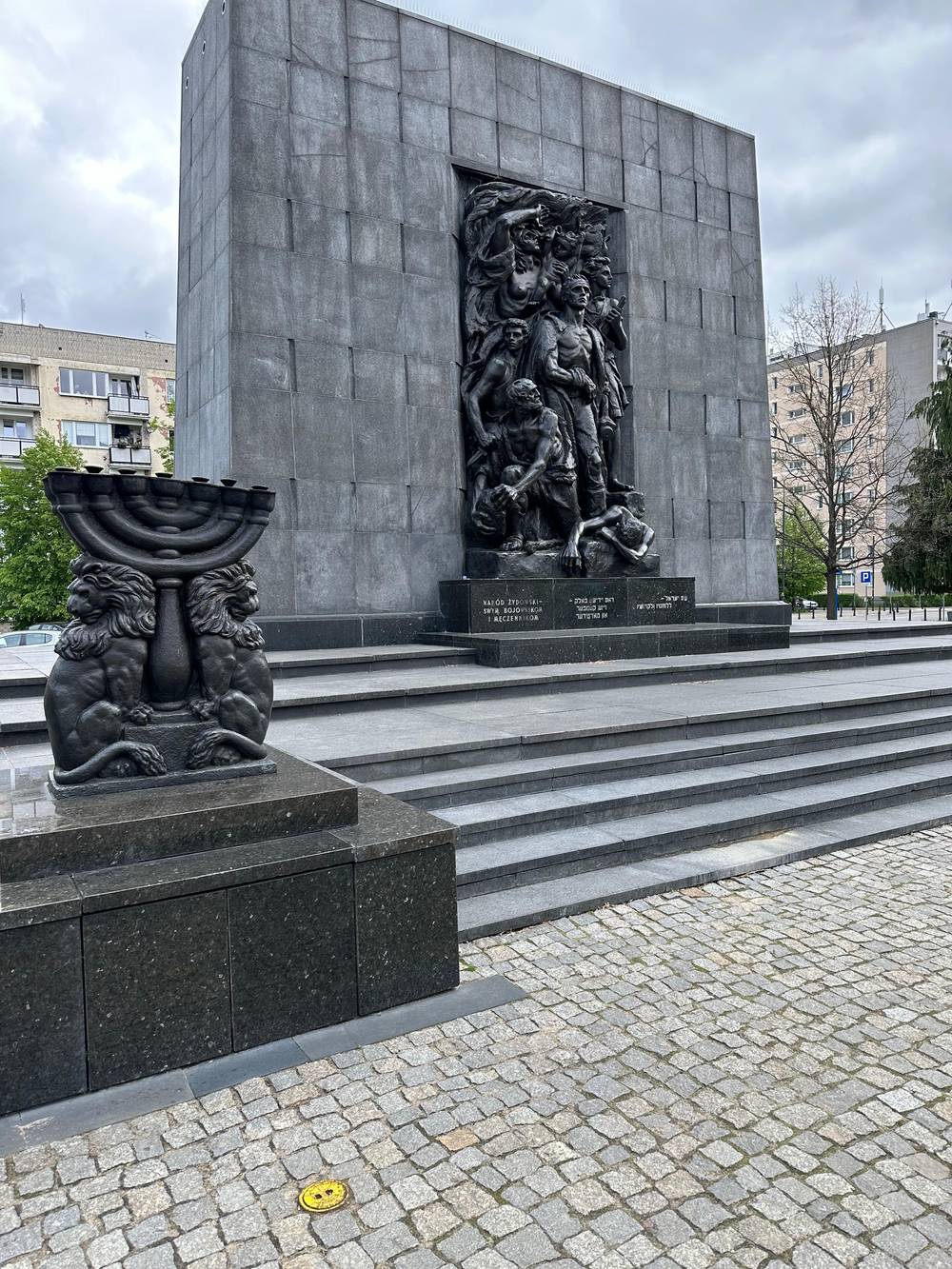
Begin the northern half at the Monument to the Ghetto Heroes, put up soon after the war for the fighters and the dead of the ghetto.37 Facing it is the POLIN Museum, and on this square Willy Brandt went down on his knees in 1970.62,38 The museum itself needs time: the tourist office plans 3 hours for it, and its route ends in the ghetto and the years after the war.40,63 If you plan to go in, do it on a different day from the walk.
From there a trail of memorial stones leads you north towards the Umschlagplatz.6 On the way, where Miła Street meets Dubois Street, rises the mound over the bunker where Mordechai Anielewicz and about 120 insurgents were found on 8 May 1943.41 Stop at each stone and read the name and the few lines beneath it; together they tell the story of the ghetto through single lives, stone after stone.
The walk ends at the Umschlagplatz on Stawki Street. From 22 July 1942, transports of Jews to the Treblinka extermination camp left from here.42 Its walls are shaped to evoke the ghetto wall and a goods wagon at once.25 There is no better place to finish, and no reason to hurry. Sit for a while on the step, and let the traffic of Stawki Street pass in front of you before you walk away.
Walking alone has real advantages: you set the pace, you stay as long as you need at each site, and it costs nothing beyond museum tickets. What you miss are the stories that turn a fragment of brick into a person's life. The tourist office recommends licensed guides for walks through Jewish Warsaw.26 Even a single guided walk at the start of your stay can make your own walk afterwards far richer.
Several group walks follow much of this route. A Jewish history walk of 2.5 hours meets at All Saints Church on Grzybowski Square. A 2-hour walk on Jewish Warsaw and stories from the ghetto is wheelchair accessible. For a private walk at your own pace, the site's 3-hour ghetto tour offers hotel pickup or a meeting point on Próżna Street. Compare the prices for your group before you choose.
A good plan for a first visit is a guided walk on your first morning and this self-guided route on the second day, with the POLIN Museum or the Jewish Historical Institute in between. Wear comfortable shoes, carry water and a light rain jacket, and charge your phone before you set out, with the Warsaw Ghetto walking tour map saved for offline use. And leave space in your day after the walk; you may need a quiet hour to take in what you have seen.
FAQ
Doors open at 10 AM and close at 5 PM, or at 4.00 PM on a Friday, with a pause at lunchtime.19
Iron slabs set into the pavement mark the line of the former ghetto.4
It was closed to visitors from 27 February 2026 until the autumn.43
From 22 July 1942, the trains to the Treblinka extermination camp were loaded there.42
Sources
Questions about the Ghetto walk? Ask a real person here.