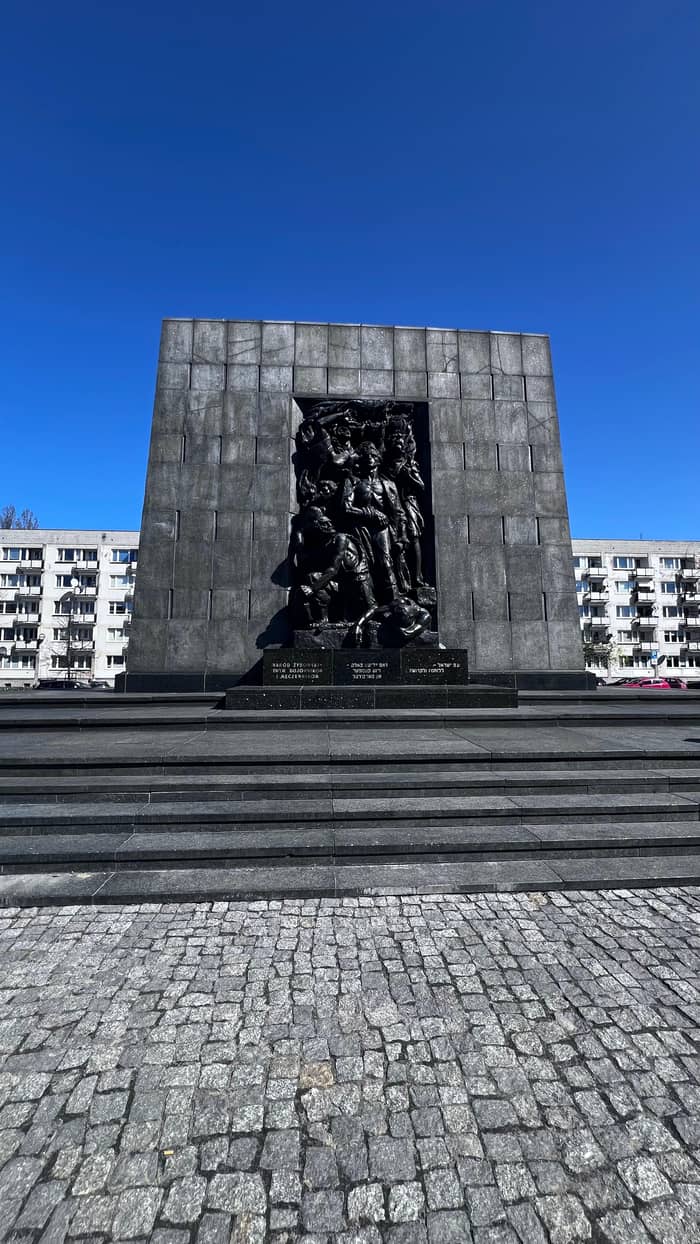
Treblinka
Treblinka guided tour
Half a day with pickup
- Length6 hours
- PickupIncluded
- AccessWheelchair accessible
Guides
Language
Currency
See open slotsfrom €74 · cancel without payingCost for your party
Look at 4 options
Choose a memorial trip and the size of your party.
≈
View≈
View≈
View≈
ViewConverted at the ECB reference rate, from-prices as listed by GetYourGuide. The precise amount is shown when you book.
Can you visit Auschwitz from Warsaw, and should Treblinka come first? How long each trip takes, how entry works, the rules at both memorials and how to prepare.
Editorial team, warsawghettotour.click · Updated November 9, 2026 · Allow 8 min
Facts at a glance
Can you visit Auschwitz from Warsaw? Yes, but only as a very long day. The memorial lies in Oświęcim, near Krakow, and the guided trips sold from Warsaw run for 13 to 17 hours. A car tour for a group capped at 8 takes 13 hours, with about 4 hours on the road each way. A tour with the fast train to Krakow lasts 15 hours, and the train leg takes 2.5 hours. A day trip by train with pickup from your hotel lasts 17 hours.
The memorial itself sets the rhythm of the day. Admission to the grounds of Auschwitz-Birkenau is free, but entry cards must be reserved online at visit.auschwitz.org.1 No entry cards are sold at the gate.7 A standard tour with one of the memorial's guides takes about 3.5 hours, and the memorial asks visitors to see both Auschwitz I and Auschwitz II-Birkenau.8,9 Add the travel, and the day becomes very long.
An overnight stay in Krakow can make the trip more humane: a night's rest before the memorial and time afterwards to absorb it. If your time is short and your base is Warsaw, though, the day trips work, and the train options let you rest on the way back. Whatever you choose, book early, carry the ID that matches your booking, and keep the evening free. It is not a day to combine with sightseeing or a celebration.
Side by side
| Topic | Treblinka | Auschwitz-Birkenau |
|---|---|---|
| Guided trip | 6 hours | 13 to 17 hours |
| Entry | Free; PLN 10 parking | Free; online entry card |
| Closed | Easter, Christmas, 1 January | 1 January, 25 December, Easter Sunday |
| Children | Not under 14 | Fast-train tour: not under 14 |
| Own guide | PLN 80 per started hour, English | Book 2 months ahead |
From the Treblinka Museum, the Auschwitz Memorial and the listings named on this page.22,1,23,24,6,25,26
For a visitor who has walked the Warsaw Ghetto, a Jewish tour from Warsaw to Treblinka is the journey that completes the story. The first transport to reach the Treblinka II extermination camp came from the Warsaw Ghetto on 23 July 1942.3 Trains had left the Umschlagplatz on Stawki Street for Treblinka from 22 July.15 The camp operated from July 1942 until November 1943 and covered about 17 hectares.10,16 Standing at the Umschlagplatz in Warsaw and then at Treblinka joins the start and the end of the same journey.
By the Treblinka Museum's estimate, the Germans murdered 800,000 to 900,000 Jews at Treblinka II, most of them citizens of Poland; Roma and Sinti were among the victims too.17 A typical transport had 60 wagons, of which 58 carried deportees.18 The trains stopped at the village railway station, about 4 km from the camp.19 Janusz Korczak and the children of his orphanage were among those murdered there.20
On 2 August 1943 the prisoners rose in a revolt prepared in secret; of about 840 Jews then in the camp, nearly 200 managed to escape, the museum records.11 The names of 143 former prisoners who survived the war are known.21 In November 1943 the Germans dismantled the camp, ploughed the land and sowed it with lupins.12 What you visit today is a memorial landscape built on that erased ground.
Plan the day
Total length of guided trips from Warsaw as each listing states it.
The Treblinka Memorial Site covers the former Treblinka II extermination camp and the Treblinka I labour camp, together with the gravel pit, the Black Road between the camps, the execution site and the area of the old railway station.28 The museum says that to understand the place you need to see both camps.29 About 10,000 Jews, Poles and Roma were executed or died of disease, exhaustion and forced labour in Treblinka I.30
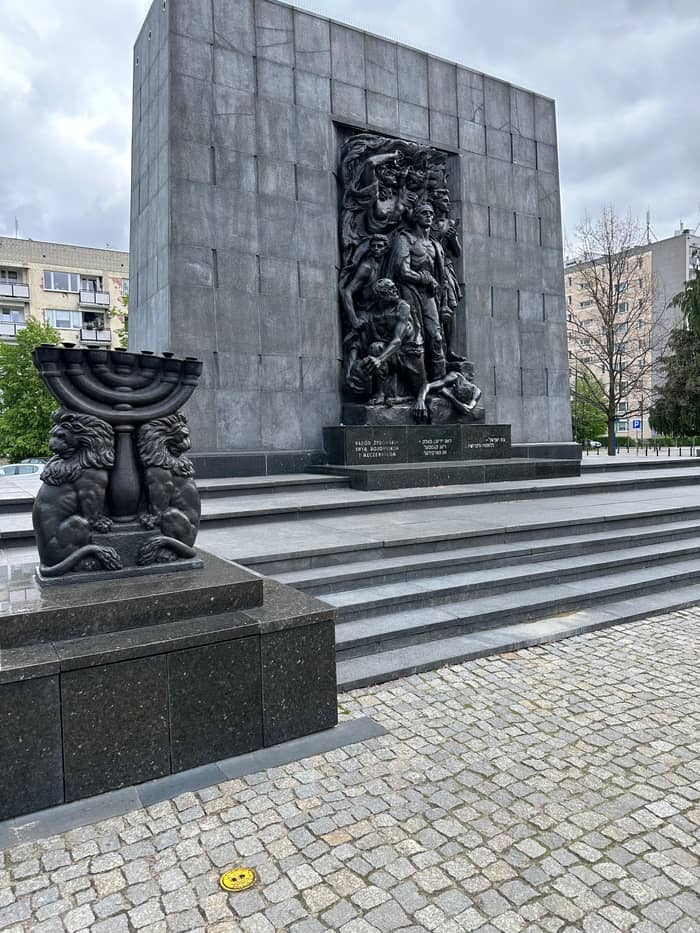
The museum calls it the largest place of burial and remembrance for victims who held citizenship of the Second Polish Republic.31 There is a stone dedicated to the martyrs of the Warsaw Ghetto, where daffodils, the symbol of the Ghetto Uprising, were laid for the Uprising anniversary in April.32 In 2020 the museum and the Polish Janusz Korczak Association launched the Korczak Forest, trees with plaques planted in memory of Korczak, his staff and his pupils.14
The exhibition in the museum building is closed until further notice, during the rebuilding of the museum.33 The open grounds remain the heart of the visit. The museum offers a free audioguide app for Treblinka II with 15 points along the path of those brought to the camp, in Polish, English, German and Hebrew.34,35 A second app guides you through Treblinka I in 19 points.36 Download both before you leave Warsaw.
Choose
Decide by time, by what you want to understand, and by who travels with you.
If I have half a day
Treblinka
A guided trip from Warsaw lasts 6 hours.
If I want to follow the ghetto's story
Treblinka
The first transport there came from the Warsaw Ghetto.3
If I can give a whole day
Auschwitz by train
The day trip with pickup lasts 17 hours.
If I want fewer hours on the road
Auschwitz by fast train
On the fast-train tour, the ride to Krakow takes 2.5 hours.
If I travel with young children
Neither, for now
Treblinka does not recommend visits under 14.6
Guided options
Treblinka
Half a day with pickup
Auschwitz
Pickup, train and Krakow
Auschwitz
Small group of up to 8
The museum stands at Wólka Okrąglik 115, in the municipality of Kosów Lacki.13 The former camp areas are open from 9:00 AM to 6:30 PM.4 Between 1 November and 31 March, the winter season, everyone must be off the grounds by 4:00 PM.5 The museum is closed at Easter, on 24 December, on 25 and 26 December and on 1 January.23 On other public holidays the museum may also close; check its website before you set off.
Admission to the museum is free. A fee of PLN 10 per person covers the car park and toilets, and no fee is charged on Mondays.22,68 There is no cloakroom or luggage storage, and the car park is unguarded.69,72 Dogs are not allowed, except guide dogs.73 The museum recommends visits to the camp sites for people aged 14 and over, and younger children may come only with an adult guardian.74 Bring what you need for the day with you.
The rules ask visitors to behave with dignity and respect and to wear suitable clothes.27 Noise and litter are forbidden.75 Photographs for personal use are allowed if the dignity of the site is respected.76 You may lay flowers or stones, or light candles in designated places.77 The museum estimates a visit at up to 3 hours.78 Bring water, sturdy shoes and a rain layer; most of the visit is outdoors.
Map
Open the small ghetto panel for the southern traces, the large ghetto panel for Muranów and the Uprising sites, then the cemeteries, and last the memorial sites outside Warsaw.
Discover 23 stops
Select a route, then tap a marker or stop to see its note and open Google Maps.
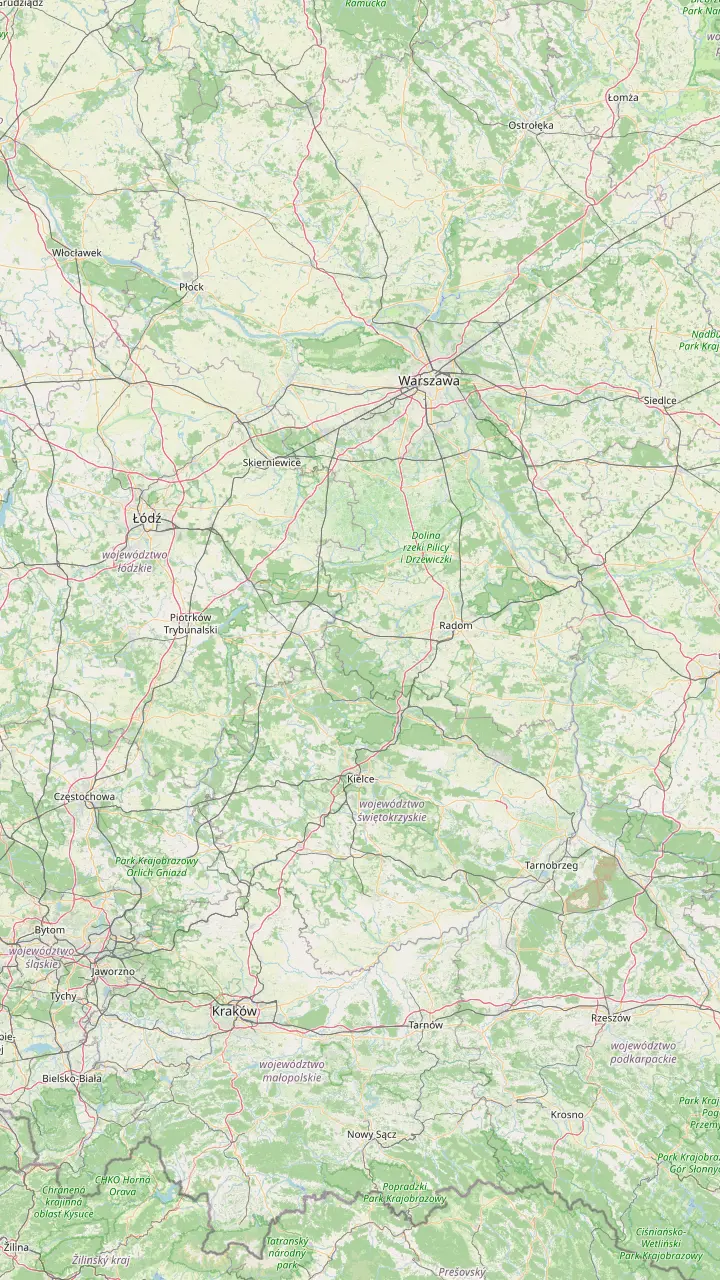
Fast-train tours to Auschwitz meet here; the train to Krakow takes 2.5 hours.
Google MapsWólka Okrąglik 115; the former camp areas are open from 9:00 AM to 6:30 PM, and in winter visitors leave by 4:00 PM.
Google MapsTrain day trips from Warsaw continue from Krakow to Auschwitz by shared transport.
Google MapsFree entry with an online entry card; open every day except 1 January, 25 December and Easter Sunday.
Google Maps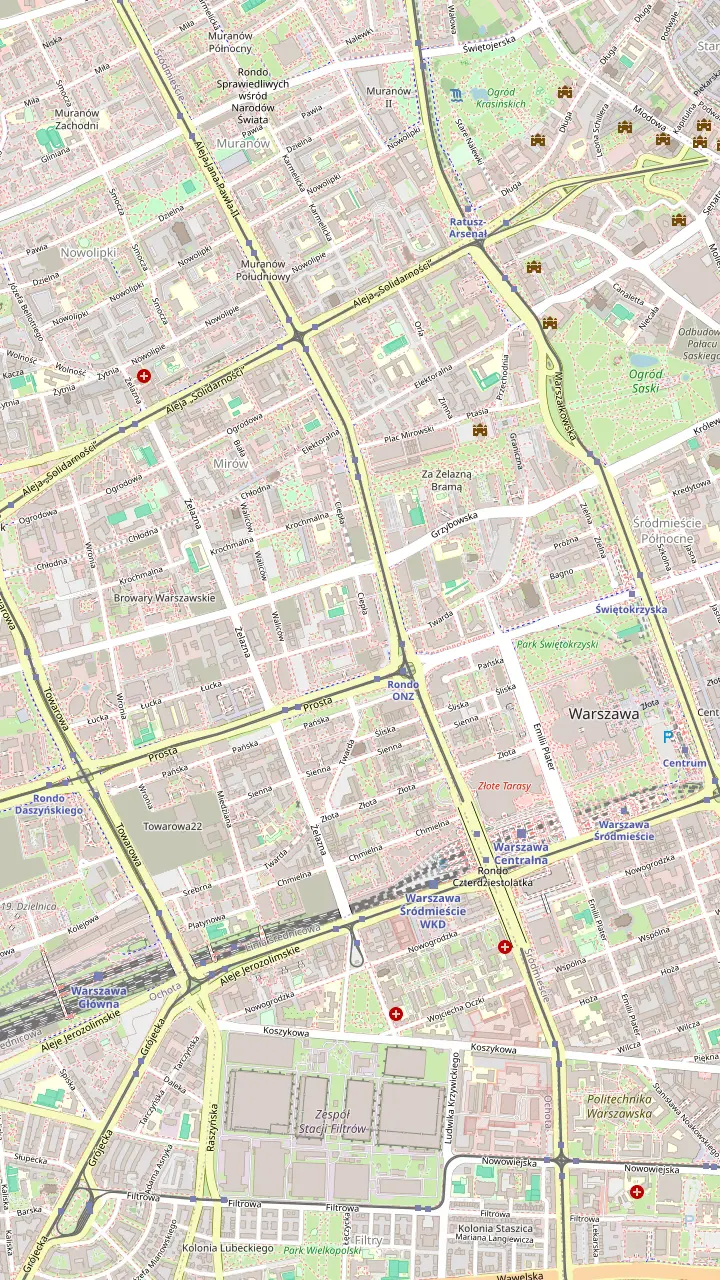
Before the war the square bustled with Jewish shops and stalls; the Singer's Warsaw festival ends here with a concert.
Google MapsThe only pre-war synagogue in Warsaw still in use; open Sunday to Thursday 10 AM to 5 PM, Fridays to 4.00 PM.
Google MapsOne of the few streets of the ghetto that survived the war.
Google MapsWall fragments in the courtyard between Sienna 55 and Złota 62; the Bersohn and Bauman hospital at Sienna 60 stands beside it.
Google MapsThe walls of the pre-war house at 11 Waliców date from the ghetto years; the poet Szlengel lived at number 14.
Google MapsA light installation where a wooden footbridge joined the Large and Small Ghettos from 26 January 1942.
Google MapsIn May 1943 Marek Edelman's group left the sewers through the manhole at 51 Prosta Street.
Google Maps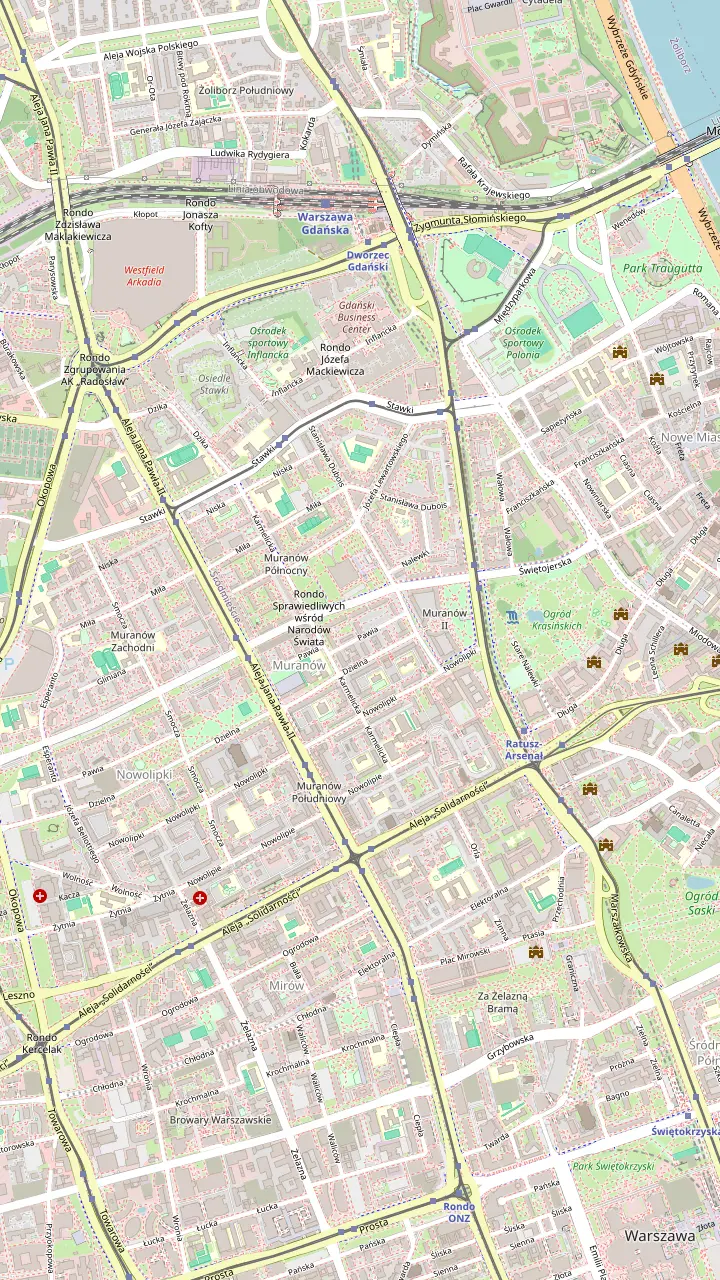
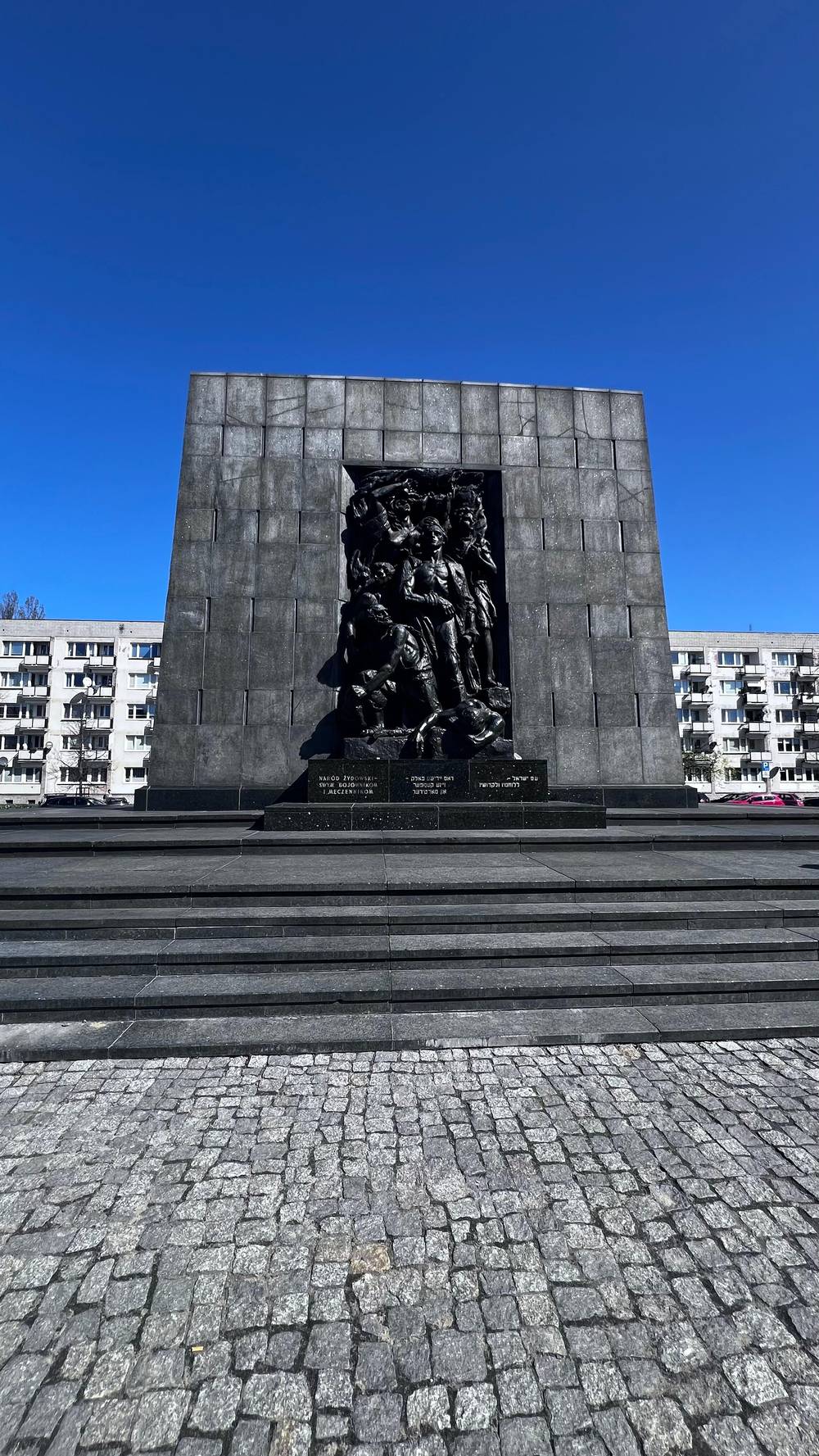
Raised soon after the war; Willy Brandt knelt here in 1970.
Google MapsThe focal point of Muranów since 2013; the tourist office plans 3 hours for a visit.
Google MapsThe ŻOB command bunker, found by the Germans on 8 May 1943; a mound and plaques mark it.
Google MapsTransports to the Treblinka extermination camp left from here from 22 July 1942.
Google MapsAt Dzielna 24/26; closed to visitors from 27 February 2026 until the autumn; check before you go.
Google MapsThe ghetto's secret archive was hidden in a school basement at today's 28 Nowolipki Street.
Google MapsThe Ringelblum Archive exhibition and fire traces on the floor; free on Mondays, closed on Saturdays.
Google MapsA surviving stretch of the old Jewish main street, with its cobbles and tram rails.
Google Maps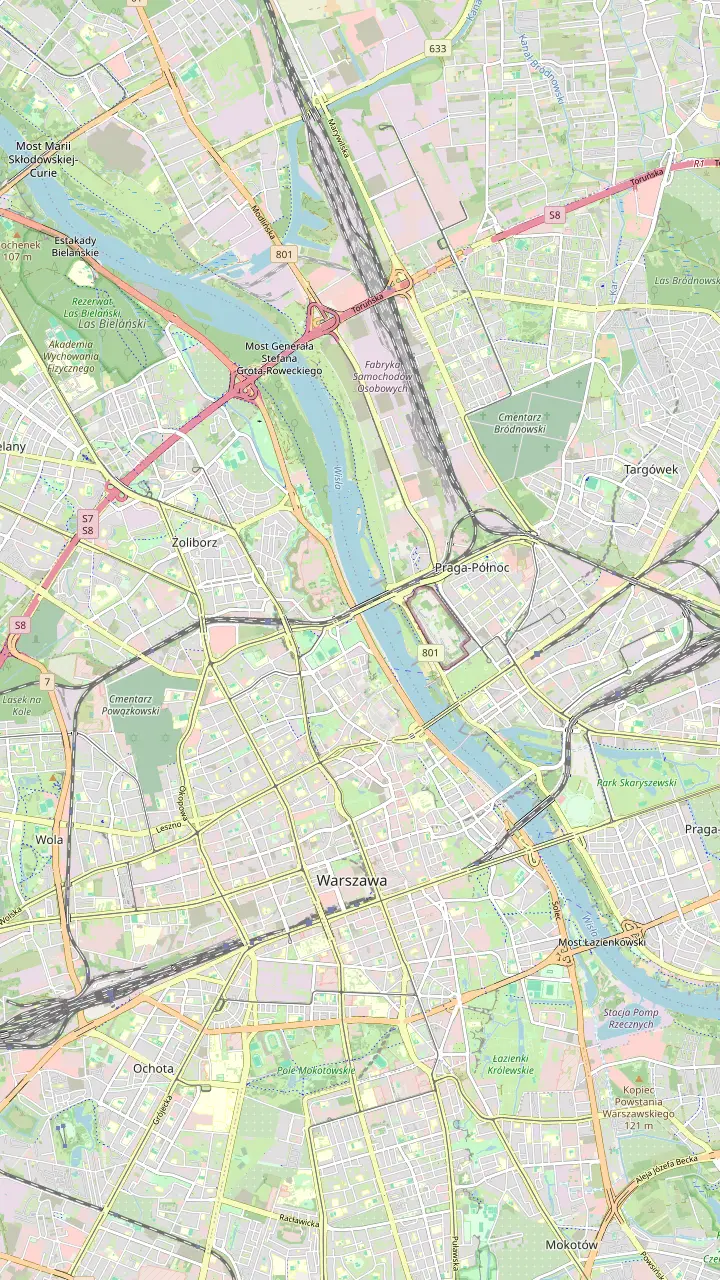
Open Sunday to Thursday 10:00 AM to 5:00 PM and Friday to 3:00 PM; admission PLN 20.
Google MapsFounded in 1780; open on Sundays from 10.00 AM to 4.00 PM with its exhibition.
Google MapsThe zoo director's family hid Jews from the ghetto here; by the tourist office's estimate, as many as 300 people survived thanks to them.
Google Maps2 rooms of a former house of prayer with wall paintings, in the Museum of Warsaw Praga.
Google MapsMapping data © OpenStreetMap contributors
Treblinka
July 1942
Treblinka II begins operating.10
23 July 1942
The first transport arrives from the Warsaw Ghetto.3
2 August 1943
Prisoners rise; nearly 200 escape.11
November 1943
The camp is dismantled and the ground ploughed and sown.12
1 July 2018
The Treblinka Museum becomes an independent institution.13
2020
A memorial forest for Korczak and his pupils is launched.14
The simplest way is a guided trip with pickup. A 6-hour guided trip to Treblinka includes pickup in Warsaw and is wheelchair accessible. A small-group version, capped at 8 people, allows about 2.5 hours by car on the way out, 2 hours at the memorial, an hour for lunch and 1.5 hours back. Either option gives you a guide who can link what you see to the ghetto streets you walked in Warsaw.
If you drive yourself, set the address of the museum in your navigation and leave early enough to arrive with time to spare before the gates close. You can book a museum guide on site: a tour in English costs PLN 80 per started hour.25 Guides must be booked at least 14 days ahead and work Monday to Friday.79,80 Reaching the memorial without a car takes careful planning, and a guided trip is the easier choice.
The museum suggests how much time to plan with a guide. About 1 hour covers the exhibition in the museum building, 2 hours add the grounds of Treblinka II, and 3 hours add the remains of Treblinka I.81,82,83 With the building closed for now, plan the longer visit to the open grounds. Allow time for silence at the end; you will not want to rush back into the car, and the drive home is a good time to talk.
Video
SKY HERITAGE PICTURES on YouTube · Video data is requested only when you tap play.
Visitors must behave with dignity and respect appropriate to the character of a memorial site and wear appropriate attire.
Checklist
Since 1 March every entry card to the Auschwitz memorial has been available online only, at visit.auschwitz.org.2 Be at the memorial no less than 30 minutes ahead of your tour, to allow for the security checks.70 Bags may not be larger than 35x25x15 cm.71 The memorial is open all year, every day except 1 January, 25 December and Easter Sunday.24 If you go on your own, plan at least about 90 minutes for Auschwitz I and the same again for Birkenau.84
Auschwitz I and Auschwitz II-Birkenau are 3.5 km apart, and a museum shuttle runs between them.85,86 Buses from Krakow go directly to the museum car park.87 The memorial suggests a visit with one of its guide-educators, and with demand high it asks for guides to be booked at least 2 months ahead.88,26 The tours from Warsaw include a guided tour of both camps, which takes this task off your hands.
Read the booking terms closely. On the train day trip, the full name you give must match the ID you show at the entrance, and museum tickets cannot be refunded. The same rule applies on the car tour. The memorial asks visitors to behave with solemnity and to dress in a way that fits the place.89 Quiet clothes, quiet voices and a phone left in your pocket suit both memorials, whatever the weather.
Treblinka and Auschwitz are both places of mass murder, but they answer different questions. Treblinka is where the deportation trains from the Warsaw Ghetto ended, and a guided trip from Warsaw takes about 6 hours. Auschwitz is a much longer day from Warsaw and a different chapter of the same history. For a trip that follows the city's own history, Treblinka is the natural sequel.
Do not plan both on consecutive days, and do not schedule anything light straight afterwards. Children need careful preparation, and the Treblinka Museum does not recommend visits by children under 14.6 The fast-train Auschwitz tour gives the same advice for its own trips. Talk with teenagers before you go about what they will see, and agree on a way to step away if it becomes too much.
Before the trip, spend a morning in Warsaw on the ghetto's traces. A self-guided tour of Jewish Warsaw that ends at the Umschlagplatz on Stawki Street, where the trains were loaded, gives Treblinka a starting point you have seen with your own eyes.90 The Jewish Historical Institute, free on Mondays, holds the archive the ghetto left behind.58 Then travel, and leave the evening quiet.
FAQ
Tours from Warsaw last 13 hours by car and up to 17 hours by train with pickup.
A guided tour from Warsaw with pickup lasts 6 hours in total.
A fee of PLN 10 per person covers parking and toilets, and there is no fee on Mondays.22
The museum does not recommend visits by children under the age of 14.6
The first transport to reach Treblinka II came from the Warsaw Ghetto on 23 July 1942.3
Sources
Questions about the Ghetto walk? Ask a real person here.