Private group
Private Ghetto walk
Monument, wall, Umschlagplatz
- Length3 hours
- GuideEnglish, German
- PickupAvailable
Guides
Language
Currency
See open slotsfrom €74 · cancel without payingFind a stop on the map
Private Ghetto walk with pickup, 3 hours
★ 4.9 · 388 guest reviews
Discover 23 stops
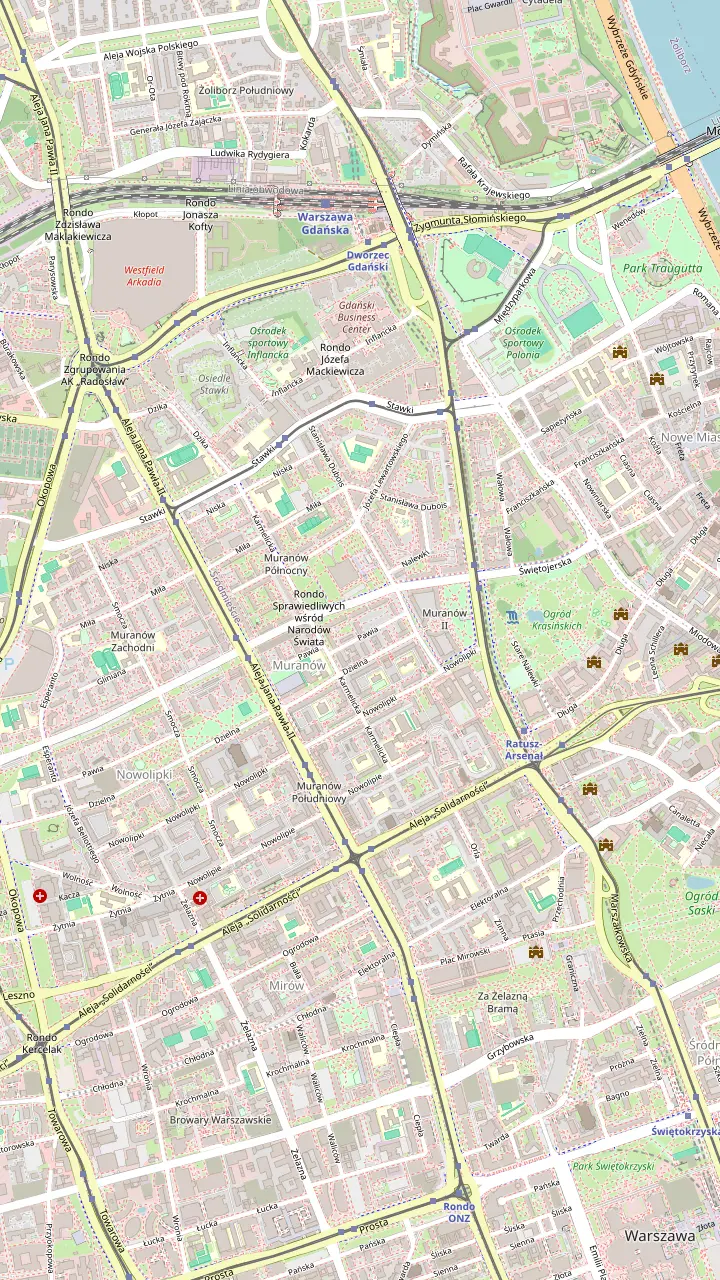
Select a route, then tap a marker or stop to see its note and open Google Maps.
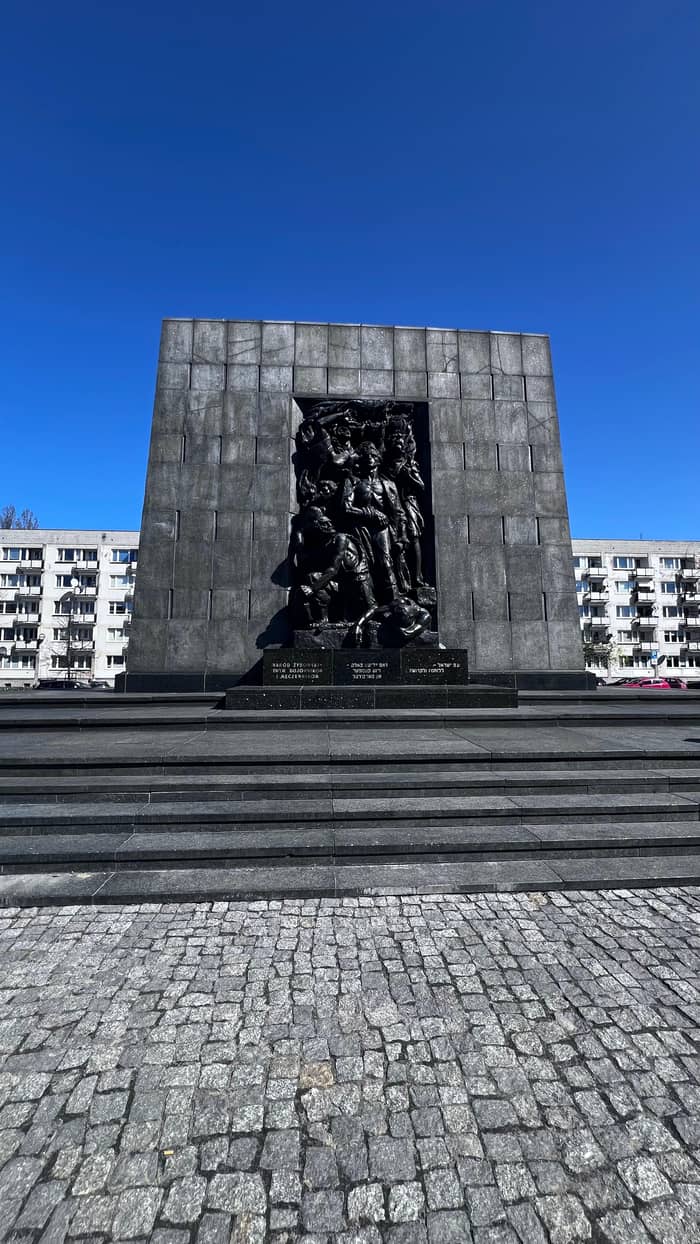
Raised soon after the war; Willy Brandt knelt here in 1970.
Google MapsThe focal point of Muranów since 2013; the tourist office plans 3 hours for a visit.
Google MapsThe ŻOB command bunker, found by the Germans on 8 May 1943; a mound and plaques mark it.
Google MapsTransports to the Treblinka extermination camp left from here from 22 July 1942.
Google MapsAt Dzielna 24/26; closed to visitors from 27 February 2026 until the autumn; check before you go.
Google MapsThe ghetto's secret archive was hidden in a school basement at today's 28 Nowolipki Street.
Google MapsThe Ringelblum Archive exhibition and fire traces on the floor; free on Mondays, closed on Saturdays.
Google MapsA surviving stretch of the old Jewish main street, with its cobbles and tram rails.
Google Maps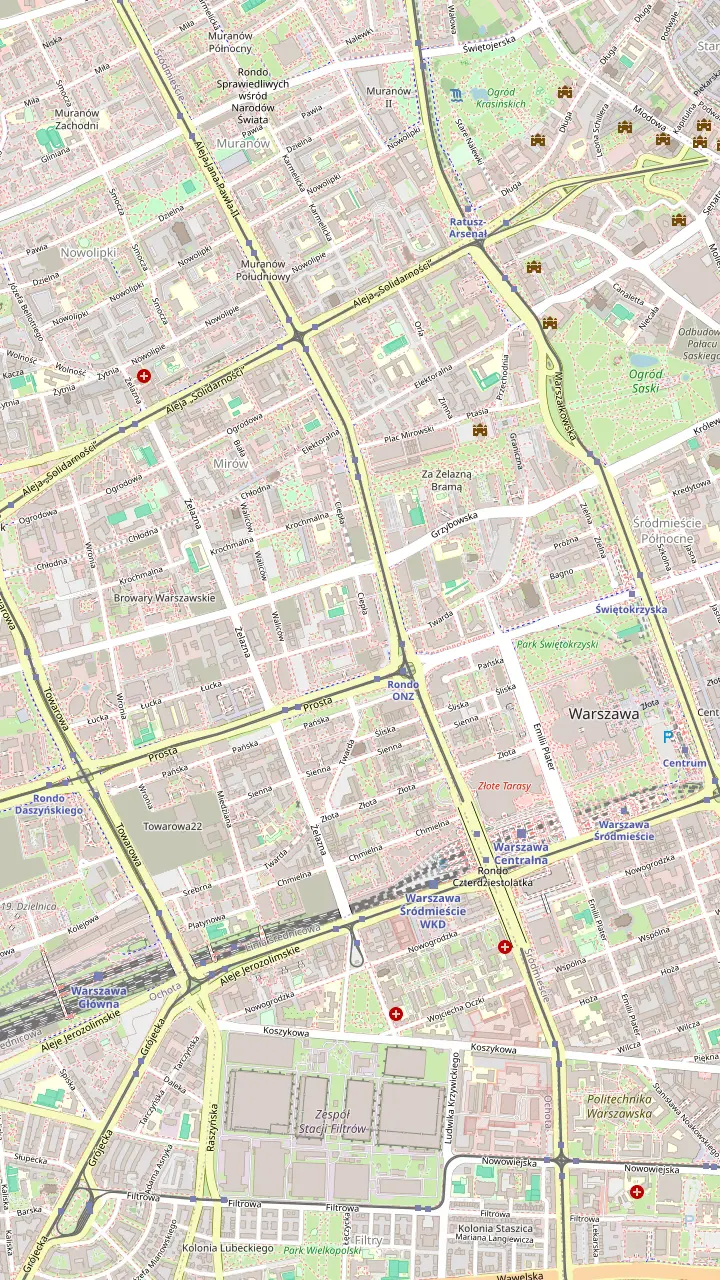
Before the war the square bustled with Jewish shops and stalls; the Singer's Warsaw festival ends here with a concert.
Google MapsThe only pre-war synagogue in Warsaw still in use; open Sunday to Thursday 10 AM to 5 PM, Fridays to 4.00 PM.
Google MapsOne of the few streets of the ghetto that survived the war.
Google MapsWall fragments in the courtyard between Sienna 55 and Złota 62; the Bersohn and Bauman hospital at Sienna 60 stands beside it.
Google MapsThe walls of the pre-war house at 11 Waliców date from the ghetto years; the poet Szlengel lived at number 14.
Google MapsA light installation where a wooden footbridge joined the Large and Small Ghettos from 26 January 1942.
Google MapsIn May 1943 Marek Edelman's group left the sewers through the manhole at 51 Prosta Street.
Google Maps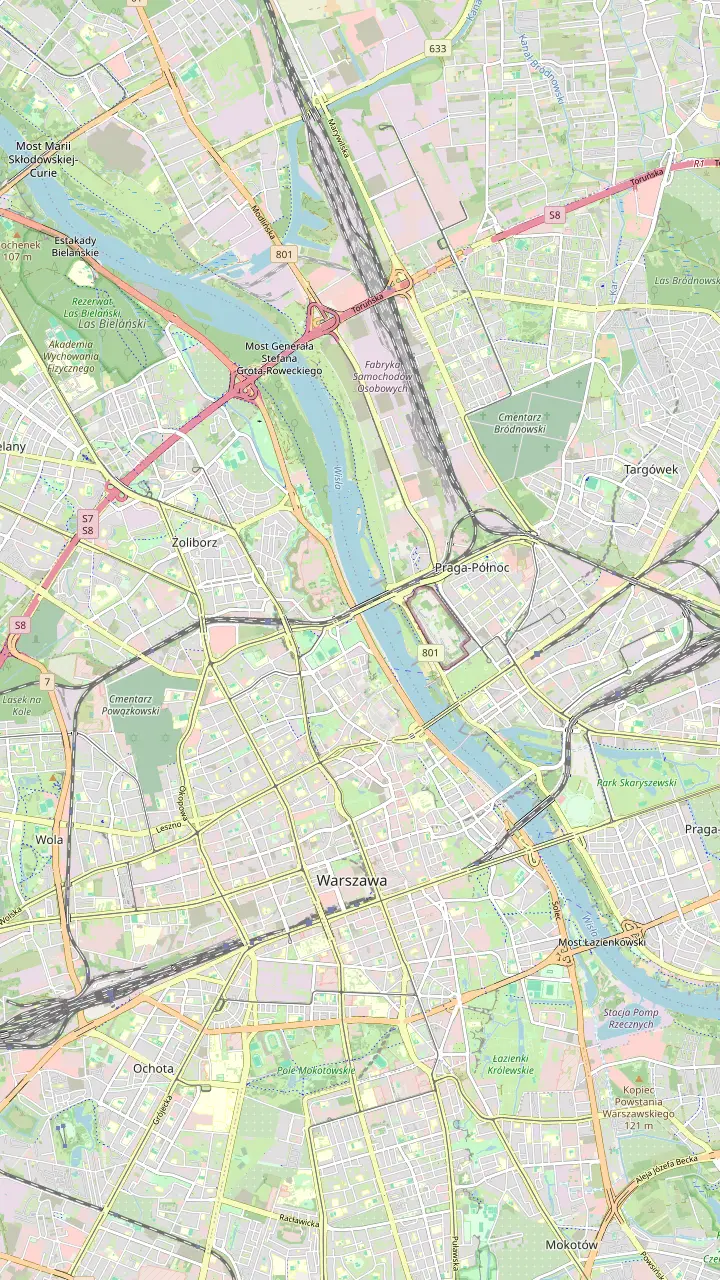
Open Sunday to Thursday 10:00 AM to 5:00 PM and Friday to 3:00 PM; admission PLN 20.
Google MapsFounded in 1780; open on Sundays from 10.00 AM to 4.00 PM with its exhibition.
Google MapsThe zoo director's family hid Jews from the ghetto here; by the tourist office's estimate, as many as 300 people survived thanks to them.
Google Maps2 rooms of a former house of prayer with wall paintings, in the Museum of Warsaw Praga.
Google Maps
Fast-train tours to Auschwitz meet here; the train to Krakow takes 2.5 hours.
Google MapsWólka Okrąglik 115; the former camp areas are open from 9:00 AM to 6:30 PM, and in winter visitors leave by 4:00 PM.
Google MapsTrain day trips from Warsaw continue from Krakow to Auschwitz by shared transport.
Google MapsFree entry with an online entry card; open every day except 1 January, 25 December and Easter Sunday.
Google MapsMapping data © OpenStreetMap contributors
A Warsaw Ghetto Uprising tour follows the last weeks of the ghetto street by street. Here is what happened, who fought, where it is remembered and how to walk it with care.
Editorial team, warsawghettotour.click · Updated November 9, 2026 · Allow 8 min
Facts at a glance
A Warsaw Ghetto Uprising tour starts with the summer before it. In the summer deportations of 1942 the Germans sent over 275,000 of the ghetto's Jews to their deaths, and only about 35,000 people remained in the city.7,8 Those left behind knew what the trains meant, and the underground began to prepare an armed answer to the next deportation. What the following months brought is told at a handful of sites in Muranów, most of them within a short walk of each other.
The first test came on 18 January 1943, when the Germans began another deportation operation.9 Armed self-defense met them; it delayed the final liquidation and bought time to prepare.10 In the weeks that followed, fighters and civilians alike prepared hiding places in rooms under the buildings, the bunkers that would shape the coming battle.11 When you stand in today's quiet courtyards of Muranów, remember that the ground beneath held such rooms.
Two organizations led the fight. The Jewish Combat Organization, known by its Polish initials ŻOB, and the Jewish Military Union, the ŻZW, rose together when the Germans returned in April.3 The Warsaw Ghetto Museum notes that help from the Polish Home Army and the People's Army was limited.3 What they chose, in a district already emptied by the deportations, was the manner of their resistance.
On foot
| Site | Where | What to look for |
|---|---|---|
| Ghetto Heroes monument | Zamenhofa, by POLIN | The place of Brandt's gesture |
| Anielewicz Mound | Miła and Dubois | Mound and plaques |
| Memorial Route | Monument to Umschlagplatz | Stones with names |
| Umschlagplatz | Stawki Street | Wall and wagon shape |
| Jewish Historical Institute | Tłomackie 3/5 | Fire traces on the floor |
| Sewer exit memorial | Prosta 51 | Manhole memorial |
Where each site is, as the city's tourist office and the JHI give it.20,19,21,22,23,13
On 19 April 1943 German forces entered the ghetto to liquidate it, and they met armed resistance.1 The street battles of the first days were followed by a long war of bunkers. Fighters and civilians hid in rooms built under the buildings, and the Germans found them one by one and cornered the people inside.11 The district was destroyed street by street and finally razed to the ground.16
Accounts gathered by the Warsaw Ghetto Museum describe a network of shelters under the house at 18 Miła Street, which served the Jewish Combat Organization as a base.17 Excavations by the museum have since recovered kitchenware, clothing, shoes, tefillin and parts of candlesticks from the site, along with documents and books.18 These ordinary objects are the closest you can come to the people who sheltered there.
On 8 May 1943 the Germans found the bunker at Miła 18.19 The commander of the ŻOB, Mordechai Anielewicz, died there with members of the command.4 The tourist office records that about 120 insurgents had been hiding with him and that most of them took their own lives.19 A grassy mound with memorial plaques now stands on the spot, at the corner of Miła and Dubois Streets.
Week by week
18 January 1943
Fighters resist a new deportation and delay the liquidation.9,10
19 April 1943
German forces enter the ghetto and meet armed resistance.1
8 May 1943
Anielewicz and the ŻOB command die in their bunker.4
May 1943
16 May 1943
Stroop orders the Great Synagogue dynamited to mark the end of resistance.14
19 June 1943
Paweł Frenkel of the ŻZW dies in a bunker.15
In May 1943 the surviving fighters looked for any route out of the burning ghetto, and the sewers were already known as a way through.12 A group led by Marek Edelman went down into the sewers at Franciszkańska Street, but without knowing the maze of channels they could not find an exit.25 Hours underground in the dark and the stench, with the enemy above, tested people who had already survived weeks of fighting.
A comrade on the outside, Kazik Ratajzer, organized the rescue. He led the group to a manhole at 51 Prosta Street and arranged transport to a hiding place.13 A memorial now marks the spot in today's Wola. It is easy to walk past; mark it on your map before you set out. Stand by the manhole for a moment and picture people climbing up into daylight, in a city still under German occupation and with few safe places to go.
Edelman had worked as a messenger at the Bersohn and Bauman Children's Hospital, the Warsaw Ghetto Museum notes, a reminder that the fighters came from every part of ghetto life.26 A book of his recollections of these weeks is on the Polish school curriculum, and the museum's school walks draw on it.27 Reading it before your visit gives the sites a voice, and it explains better than any plaque what those weeks were like.
Plan your walk
Your hours in Warsaw and your interest decide the route.
If I want the full story with a guide
The private ghetto walk
It lasts 3 hours and includes the Ghetto Heroes monument and the Umschlagplatz.
If I want both risings on a single walk
The wartime Warsaw walk
It covers the siege, the ghetto and the 1944 Rising in 2.5 hours.
If I prefer to walk on my own
Follow the Memorial Route
Stones lead from the Ghetto Heroes monument to the Umschlagplatz.21
If I want to see original evidence
The Jewish Historical Institute
Its main hall still shows traces of the fire the Germans set.23
If I am in Warsaw in April
Join the anniversary quietly
The daffodil is worn and laid as the symbol of the Uprising.24
Guided options
Private group
Monument, wall, Umschlagplatz
Group walk
Starts at Krasiński Square
Group walk
Siege, ghetto and both risings
On 16 May 1943 SS commander Jürgen Stroop ordered the Great Synagogue on Tłomackie Street to be dynamited and the neighboring library building set on fire, as a sign that all resistance had been crushed.14 The Germans treated that date as the end of the Uprising.59 The synagogue had been built in 1876 to 1878 to a design by Leander Marconi.60 Its destruction was meant as a message to the whole city.14
The fighting did not stop that day. The Warsaw Ghetto Museum writes that scattered fighting went on until June.2 On 19 June 1943 Paweł Frenkel, a commander of the Jewish Military Union, died with his comrades in an insurgent bunker.15 By then the district had been razed to the ground, and the tourist office records that after the war new housing was built on its ruins.16,61 Today a quiet residential district covers the ground where the last bunkers were.
The library building beside the synagogue survived as a burned shell and today houses the Jewish Historical Institute. Traces of that fire can still be seen on the floor of its main hall.23 Nothing of the Great Synagogue itself remains to visit. Go to the institute first and look down at that floor; it brings the last day of the Uprising closer than any monument outside, and the archive exhibition upstairs tells you who the people of the ghetto were.
Price a guided walk
Select an Uprising walk and your group size.
Look at 4 options
Select an Uprising walk and your group size.
≈
View≈
View≈
View≈
ViewConverted at the ECB reference rate, from-prices as listed by GetYourGuide. The precise amount is shown when you book.
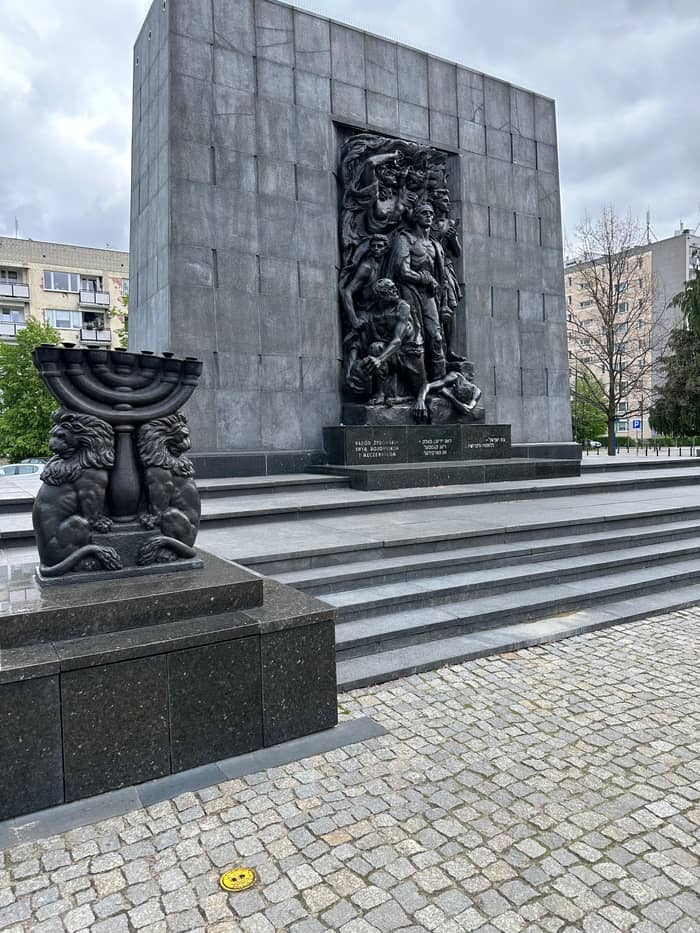
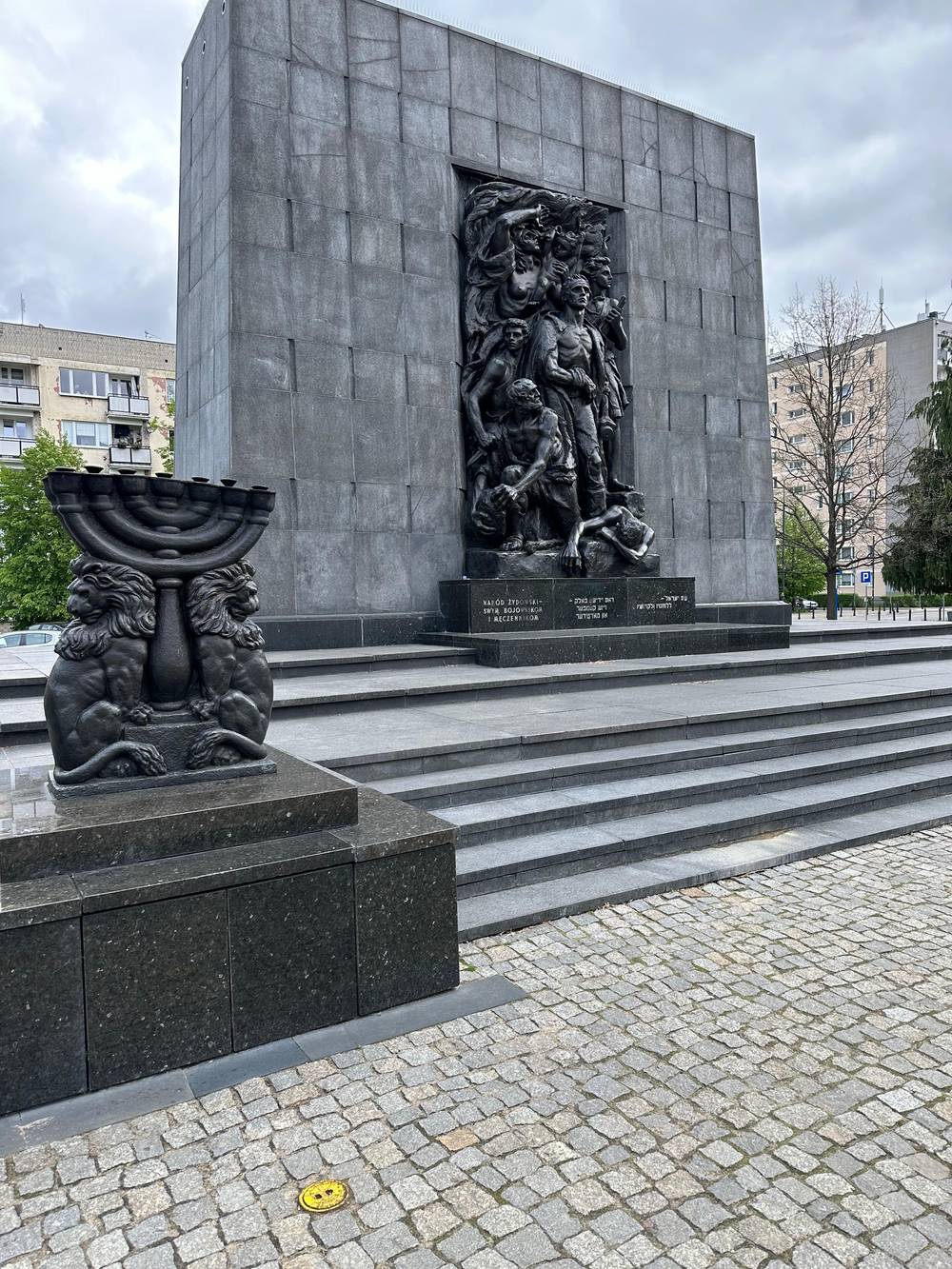
Soon after the war, a monument rose in Muranów for the fighters and victims of the ghetto: the Monument to the Ghetto Heroes.20 The POLIN Museum now faces it across the square, and in 1970 the German Chancellor Willy Brandt knelt before it in apology for the crimes of the Third Reich.6,38 It is the natural place to begin a Jewish Warsaw walking tour on the Uprising, and to stand still for a minute before you start.
From the monument, the Memorial Route of Jewish Martyrdom and Struggle leads north to the Umschlagplatz, marked by commemorative stones for figures of the ghetto.21 On the way you pass the mound on Miła Street. Near the museum there is also a monument to Jan Karski, the courier who in autumn 1942 took an eyewitness report on the murder of the Jews to the Allied leaders.62 Reading the names on the stones as you walk turns the route into a roll call.
Remembrance is also carried by symbols. The daffodil is the symbol of the Uprising, and for the anniversary in April daffodils were laid at Treblinka by the stone for the martyrs of the Warsaw Ghetto.24 The Nożyk Synagogue reopened after restoration on 18 April 1983, timed for the 40th anniversary of the outbreak of the Uprising.63 If you are in Warsaw in mid-April, watch for commemorations and join them quietly.
Video
Dr. Roy Casagranda on YouTube · Video data is requested only when you tap play.
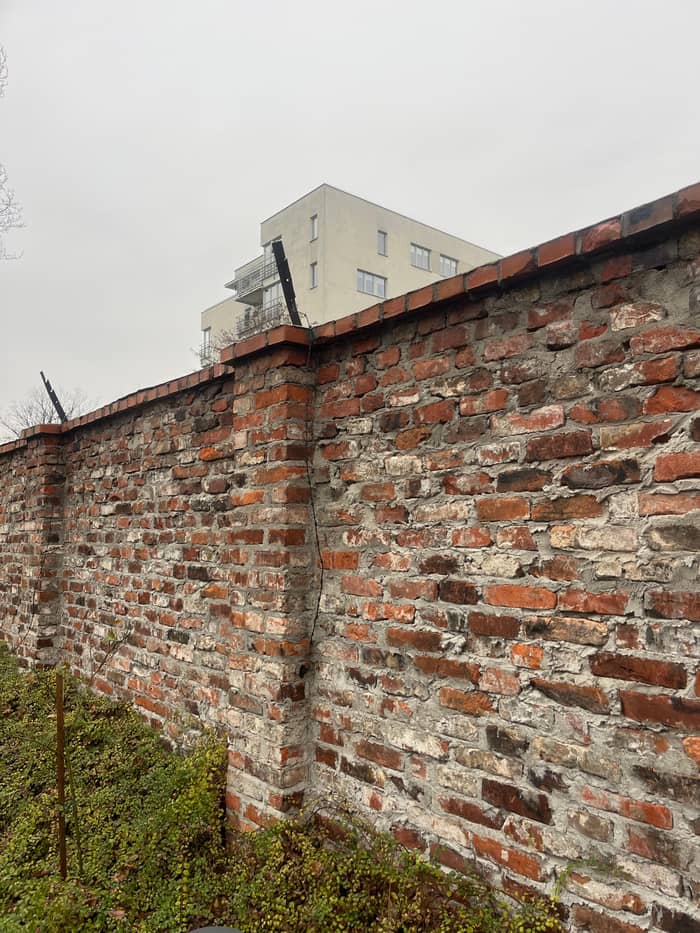
Traces of the fire are visible on the floor of the main hall of the Institute until this day.
Before you walk
The two uprisings of wartime Warsaw are easy to confuse. The Ghetto Uprising of 1943 was fought inside the walled district by Jewish underground units, during the final liquidation of the ghetto.3 The Warsaw Uprising began more than a year later, on 1 August 1944, and was organized by the Polish Home Army against the German occupiers across the whole city.64 The two are remembered in different places and with different monuments.
The two risings are still linked. The Warsaw Ghetto Museum notes that many Jews took part in the 1944 Rising.65 By then the ghetto was rubble. On 21 August 1944 German troops destroyed nearly all of the Pawiak prison on Dzielna Street with explosives.66,42 A walk through Muranów crosses ground marked by both years, and the prison site on Dzielna Street is a place where the two stories meet. Its museum was closed to visitors for part of 2026; check that it has reopened before you go.43
On your visit, keep the two stories apart in your mind and in your photographs. The Ghetto Heroes monument, the Miła Street mound and the loading square on Stawki Street belong to the Jewish fighters and the deported. The memorials to the Home Army insurgents of the later rising tell a different story, with its own places and dates. A good guide will make the difference clear, and asking about it is a respectful way to start the conversation.
A tour of Warsaw ghetto sites linked to the Uprising takes a few hours on foot. A private ghetto walk with hotel pickup lasts 3 hours and passes the Monument to the Ghetto Heroes and the Umschlagplatz. A group walk on Jewish heritage and the Holocaust lasts 2.5 hours and meets at Krasiński Square. For the whole war in the city, a 2.5-hour walk covers the siege, the resistance, the ghetto and the 1944 Rising.
If you walk alone, start at the Monument to the Ghetto Heroes, follow the memorial stones north past the mound on Miła Street to the Umschlagplatz, and end at the Jewish Historical Institute on Tłomackie Street. The sewer exit on Prosta Street lies further south and needs a separate trip. The institute's exhibitions are free on Mondays and closed on Saturdays.45,46 Allow time at each stop to read the inscriptions; the walk is short, but the stories are not.
These are places of mourning in a living neighborhood. People live in the blocks around Miła Street, children play near the mound, and the stones are part of everyday pavements. Keep your voice low, do not climb on monuments or the mound, and leave flowers or candles where others have left theirs. Photograph the memorials, not the residents, and make room for anyone who has come here to pray. In April, a daffodil is the accepted sign of remembrance.24
FAQ
The Germans found it on 8 May 1943; Anielewicz and about 120 fighters were inside.19
At the Treblinka Museum, daffodils, the symbol of the Uprising, were laid for its anniversary.24
Sources
Questions about the Ghetto walk? Ask a real person here.